Review: Ducati Scramber 1100 Special

Intermot 2014. Ducati unveils its 800 cc Scrambler in four variations. Soon followed by three extra variations and a 400 cc version. Their lifestyle-oriented approach apparently caught on, because at EICMA 2017 Ducati introduced the Scrambler 1100.
A move that gives the Italians a head start over the British, because Triumph’s bigger Scrambler will see daylight in 2019. So for now, the only direct competitor of the Scrambler 1100 is the BMW R nineT Scrambler.

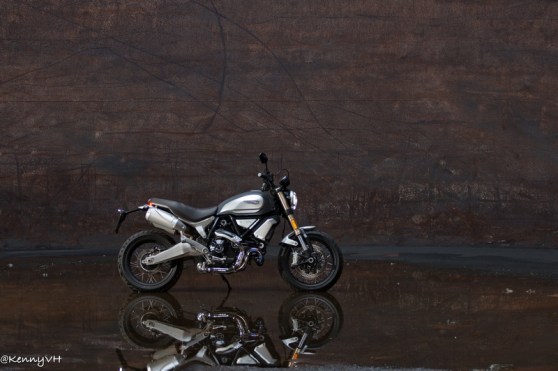
The Scrambler 1100’s design doesn’t differ that much from the 800, which – with its compact, narrow built – seems to be a noobie bike, although it doesn’t ride like that at all. The 1100 appears more mature, because everything is just a bit bigger. It comes in three variations: “regular“, the stylish Special and the racy Sport. Together with the equipment level, the price rises: $12,995, $14,295 and $14,995. I got my hands on a Special.
Sexy and graceful

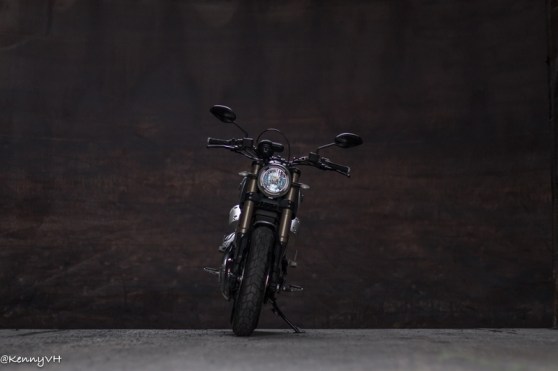
The Ducati Scrambler 1100 Special clearly targets those who prefer scramblers with a classic appearance. The spoke wheels, the aluminum fenders and the brown leather seat combined with the gray tank create a timeless look. The finishing is as expected from a Ducati bike: done with care and eye for detail. Even the brake cable curves gracefully.
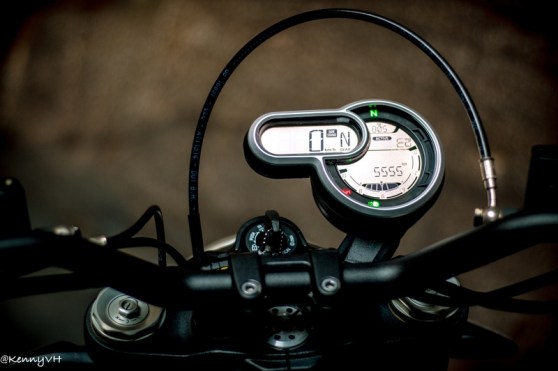
The gorgeous headlight and the Born Free inscription on the fuel cap are eye-catchers we already saw on the 800 cc Scrambler. There’s also the typical Ducatian, beautifully bending exhaust piping, an elegant display and that sexy rear, thanks to the dual exhausts and the stylish mudguard. Don’t take the word mudguard to literal: it’s so short it won’t guard you from much mud.

Balancing act

In comparison with the design, the engine Continue reading

Review: Husqvarna Vitpilen 701

Three years ago Husqvarna presented the prototype of the Vitpilen 701 at EICMA. We had to wait a long time for the final production model. Beginning of this year, at the Brussels Motor Show, it was love at first sight. Now, finally I had the chance to test if this Husky rides as good as it looks.

There’s no accounting for taste, but still: the Vitpilen is a stunner. Design-wise, it deviates very little from the concept model and usually that’s a good thing.

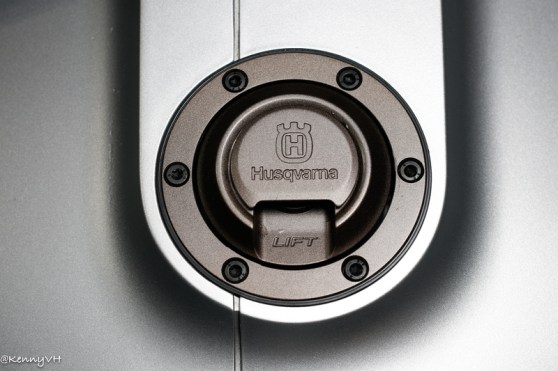
“Simple. Progressive.” That’s the motto Husqvarna uses for the Vitpilen line. This can be seen in the design of both the 701 and the 401: progressive. And unique in the motorcycle business. Just have a look at the odd shape of the tank. Or at “the split”, the yellow line cutting the bike in two. The LED lights, both front and rear, are true design wonders and stylish logos are strewn around without ever being too much.

It’s a shame they threw a GS style license plate fender on it. And how cool would it have been should they’ve kept the open air filter as seen on the concept model?

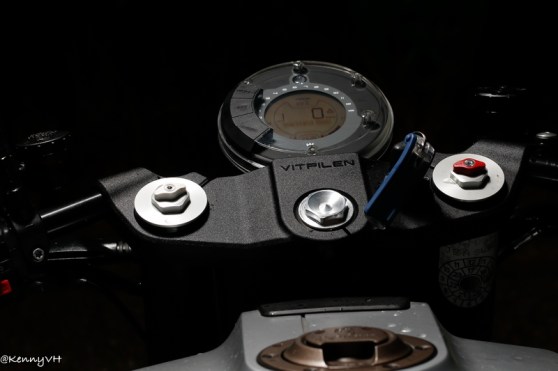
After all this drooling, it’s time to ride! No explanations beforehand needed because there are only three buttons on the small round dash. These allow you to adjust some menu settings and switch off the traction control or ABS. That’s it. Simple.

With a seat height of 830mm the bike is rather high. The saddle also has Continue reading

Quick test: Yamaha Niken

A few weeks ago, Maxxmoto sent me a message. “Jean, Niken test. What do you say?” The Yamaha Niken? That three-wheeled creature that got labelled “the Multipla of motorcycles” online? What do I say? Yes, of course! Because I really doubted Yamaha would release such a controversial machine if they didn’t believe in it for 200%. On top of that, the reactions, photos and videos after the first press introduction were very promising. So off I went, together with a dozen of other curious helmet heads, for a speed date with the Niken.

Whichever way you look at it, the Niken has an odd appearance. It’s not easy to get used to those three wheels. So it makes (sort of) sense that people dislike it, based on looks alone. And if you have a motorcycle license, why would you want two front wheels!? Plenty of prejudices, so it’s time to ride!

The first few meters leaving the parking lot feel weird. There’s no doubt that you’re manipulating two front wheels that are guided by a bulky construction including two forks per wheel (which makes four in total!). It’s not just getting used to, you really have to steer that thing in the direction you want.

But as soon as the speed slightly increases, everything changes. And a new Continue reading

Review: Yamaha XT1200ZE Super Ténéré

Travel back in time to 1983 and there it is: the very first Ténéré. After impressive Paris-Dakar participations in the late 1970s, Yamaha decided to commercialize their rally bike as an all-round kind of touring model: the XT600Z Ténéré. 43 hp, 595 cc and one single cylinder.

Thirty-five years later and there’s no longer a monocylinder bike in Yamaha’s adventure range. In 2016 we said goodbye to the last one, the XT660Z Ténéré, and with the brand new Ténéré 700 coming soon (we hope), a new twin will be added to the range. The other twin in the Yamaha’s allroad line: the Super Ténéré.

The Super Ténéré was introduced in 2010 as a direct competitor of that other 1200 cc shaft-driven adventure bike: the 1200 GS. I took the XT1200ZE Super Ténéré to the Vosges (travel report here). 2000 km should be enough to tell something meaningful about it.

The ZE has better specs than the basic Super Ténéré: adjustable electronic suspension, centerstand, cruise control and heated grips. There’s also a substantial price difference: 13.495 euro for the XT1200Z Super Ténéré, 15.895 euro for the XT1200ZE Super Ténéré (German pricing).

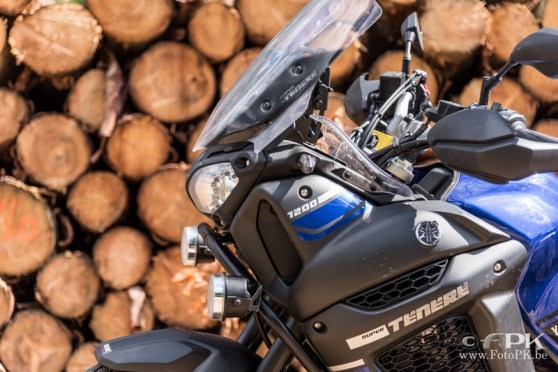
Still, the basic Ténéré’s configuration isn’t very basic: adjustable seat height (845 – 870 mm), two mappings, adjustable traction control, integral brake system, shaft drive, spoked wheels and adjustable windscreen. My demo bike also got crashbars, skid plate, LED fog lights and side cases.

More punch please

The 1199 cc parallel twin delivers 112 hp at 7,250 rpm and 117 Nm at 6,000 rpm, which certainly aren’t the highest peaks in the segment. If you keep close to those peaks, the power delivery is quite alright, yet it’s hard to deny that the XT1200ZE misses some punch. This becomes even more striking with the T (of Touring) mapping. In S (of Sport) the bike reacts more snappy without being too on-off.

The exhaust too could use some more punch. Stationary and full throttle sound good, but otherwise: meh. Sometimes the Super Ténéré is so quiet that you hold your breath, just to hear if the engine is still running.

Superb suspension

The S10 (the Super Ténéré abbreviation often used by S10 fans) counters its lack of balls with Continue reading

Review: Suzuki GSX-R1000R

If you want to rule the land of superbikes, you won’t crown yourself king with just horsepower galore and a good chassis. Without electronics you won’t get there, so it was high time Suzuki reinvented its flagship bike. Last year the completely updated GSX-R1000 and GSX-R1000R appeared on the battlefield. I took the latter out for a week.

The Suzuki GSX-R1000 is “the basic model”. Its 999,8 cc four-cylinder engine has an output of 202 hp and 118 Nm at 10,800 rpm. Variable valve timing? Check. Ride-by-wire with three riding modes? Check. ABS and cornering traction control? Check. To list but a few points of its entire checklist.

The checklist of the GSX-R1000R is slightly longer, including cornering ABS, launch control, quickshifter, LED strips above the air intakes and Showa Balance Free front and rear suspensions. Which lifts the price rather displeasing: $15,099 for the GSX-R1000, $17,199 to add that extra R. If you drop ABS on the R-less Gixxer, the price tag is lowered to $14,699 (US prices).

So is that extra R worth the extra cost? Time for a ride to find out. And then you’ll notice immediately that here’s another manufacturer who nowadays thinks it’s not done to scare riders away. Suzuki’s racer is ultra-controllable and will never surprise you with a bad temper.

The ride-by-wire has three settings, and Suzuki has done it again: instead of naming them Race, Road and Rain for example, they’re called A, B and C. Although in this case OK, Not OK and Even Less OK would’ve been better. Let me explain. The A setting has the most linear power delivery. In B and C the power curve shifts to the right a lot (B) and a lot more (C), postponing the fun. Which is pointless because the A setting can be used under every condition, making the B and C settings completely useless. As an aside, the ride-by-wire does not affect ABS nor traction control.

That traction control!

Fortunately the traction control is better. A lot better. It has 10 levels (called 1, 2, 3, 4, 5, 6, 7, 8, 9 and 10, with 1 intervening minimally and 10 maximally). Levels 1 to 4 are intended for the racetrack and allow some rear wheel spin. 5 to 8 are for the road. From a certain angle of inclination, they will make the throttle response and power delivery react more gently on the throttle impulse. Numbers 9 and 10 are the rain levels. The horsepower is never influenced by the traction control and – should you be tired of your life – there’s also a level 0: traction control off.

I started my week’s test with level 5 traction control and Continue reading

Endurofun Midsummer Ride 2018

It had been a while since I rode out with Endurofun. From the allroad trip to the Alps in 2016 to be precise. One Saturday in July the stars finally aligned again. A good occasion too to use my Anakee Wilds for what they’re made for.

Endurofun’s Midsummer Ride slightly differs from their Spring and Autumn Rides. No departure in the morning but in the afternoon, after a sandwich lunch. A dinner closes off the day, and Endurofun also offer the possibility to stay overnight. Location: in the orchard of a fruit farmer.

In addition to allroads and enduro’s, 4×4’s can also participate in the Midsummer Ride. They all get different routes, the allroads even have four routes to choose from: soft, medium, nuts and hardcore.

I joined a group that picked the nuts route: Hugo on his Tiger 800, Stef with an Africa Twin and two Dutch boys (Africa Twin and CRF250L). I myself rode on my 800 GS. With the extremely dry Belgian summer the big question was how nuts our route would actually be. Could that tiny bit of rain overnight have caused a few mud pools?  Continue reading

Bought: TomTom Rider 550

Some people are surprised if I tell them I don’t have a motorcycle GPS. I never really felt I needed one: friends with a GPS with whom I rode out, test bikes that could often be equipped with a GPS, organized rides where you just follow the pack. But I knew one day I would have to get one. Even if my old school solution (written instructions scotch-taped to my tank) is so cool.

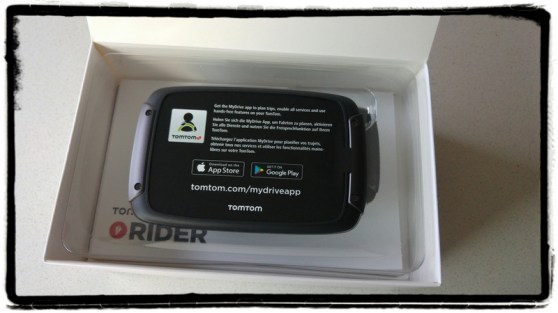
So there you have it: I bought a TomTom Rider 550, at Waypoint Leuven. A Garmin also was an option because of the offroad possibilities, but after some reading around on the net, my good experience with the Rider 450 during the trip to the Alps last year, advice from GPS owning friends and MrGPS’s extensive review (in Dutch!), I decided to go with the TomTom. Long solo offroad rides aren’t on my agenda any time soon anyway.

Next week I’m off to the Vosges for a short trip. A good opportunity for a first extensive test.