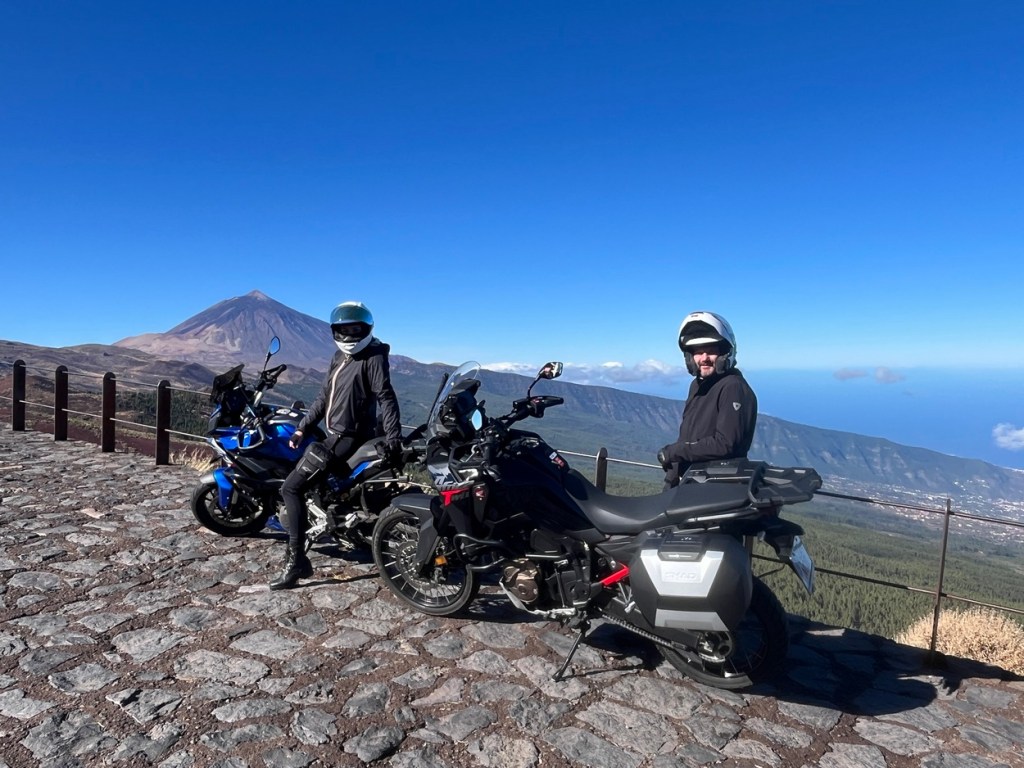
Fair-weather riders have tucked their bikes away and are counting the days until the first warm rays of spring. If you don’t want to take a winter break, Europe only offers a handful of destinations that really fit the bill. After previous winter rides on Madeira and Gran Canaria, Tenerife was this year’s chosen one.
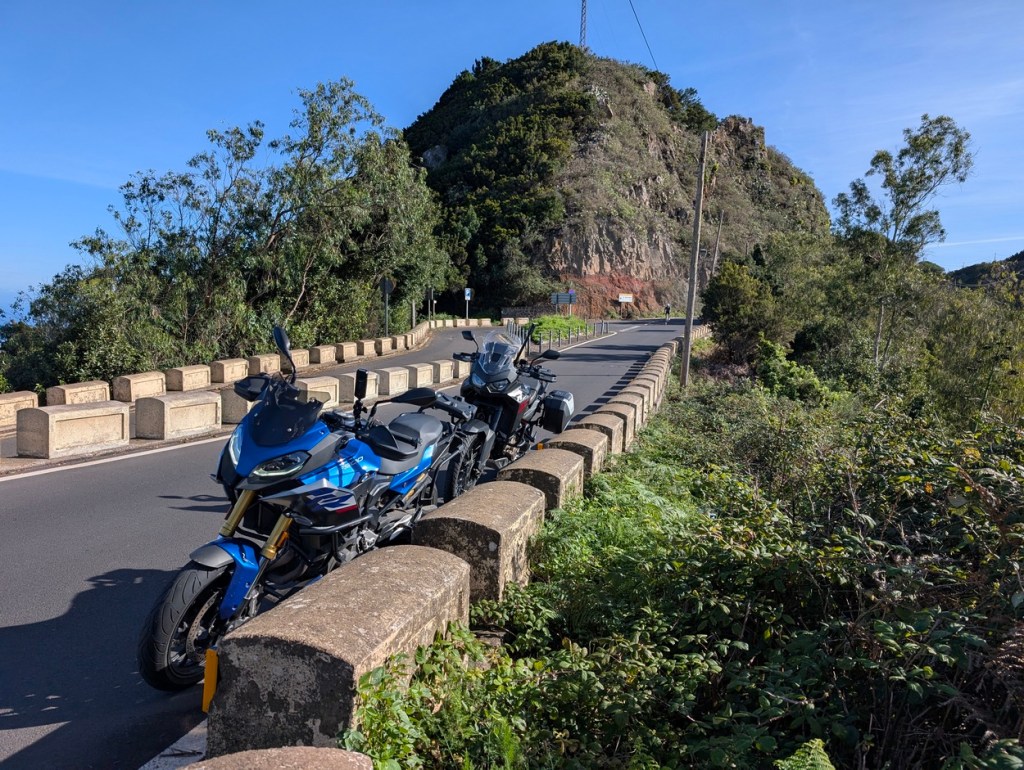
The Canary Island is a popular destination for holidaymakers looking to escape winter. We set out to find out whether it’s also a great place for motorcycling. Short answer: “¡Sí, señor!” The long answer is waiting for you below, topped off with our four favourite roads on the island.
We rented our bikes from Canary Ride, an established name with its headquarters in Gran Canaria and a branch in Los Cristianos, in the south of Tenerife. Their fleet counts around 60 bikes on Gran Canaria and 23 on Tenerife, all recent models, all spotless, and all properly maintained. There’s something for Continue reading →
Every self-respecting brand has at least one big-bore adventure bike in its lineup. Still, it’s the middleweights that fly out of showrooms the fastest. Honda sells more Transalps than Africa Twins, Triumph can’t build enough Tiger 900s while the 1200 gathers dust, and KTM’s 890 dominates their sales charts. Even Suzuki moves more V-Strom 800s than 1050s.
At BMW, it’s a different story. The smaller GS has spent generations living in the pitch-black shadow of its big brother. And while mid-size adventure bikes have become increasingly off-road capable in recent years, the F 850 GS – and its predecessors – just didn’t deliver as soon as the asphalt stopped.
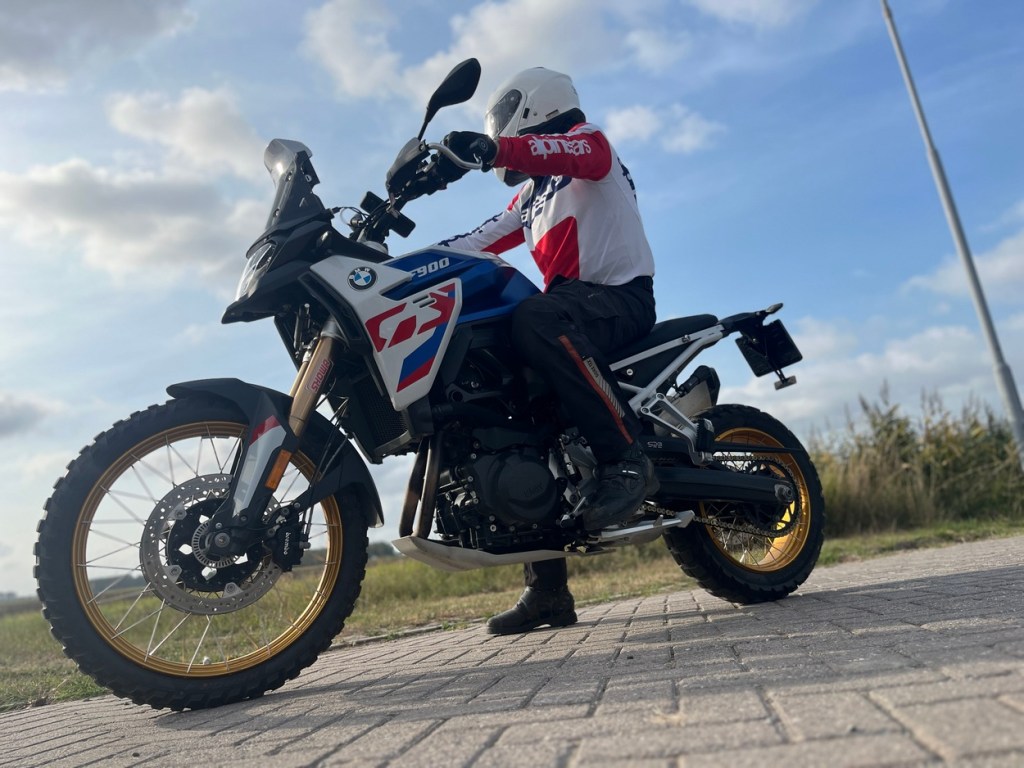
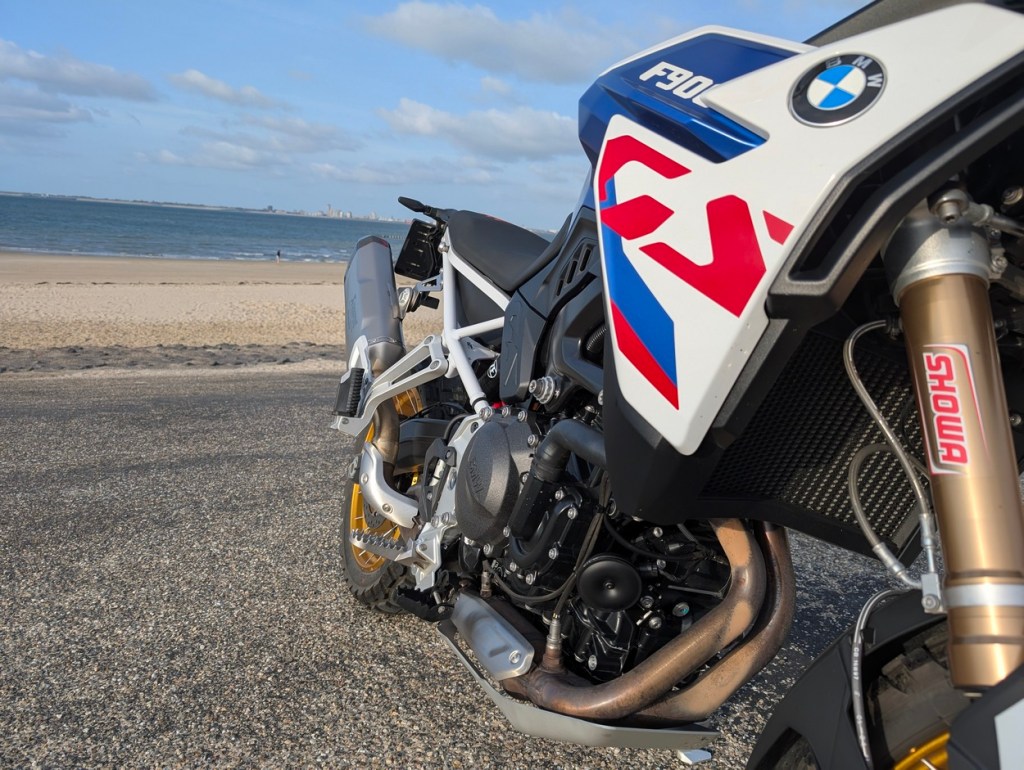
Enter the BMW F 900 GS. In Bavaria, they’ve flipped the script completely and gone all-in on a more hardcore approach. I notice it right away when hopping off Continue reading →
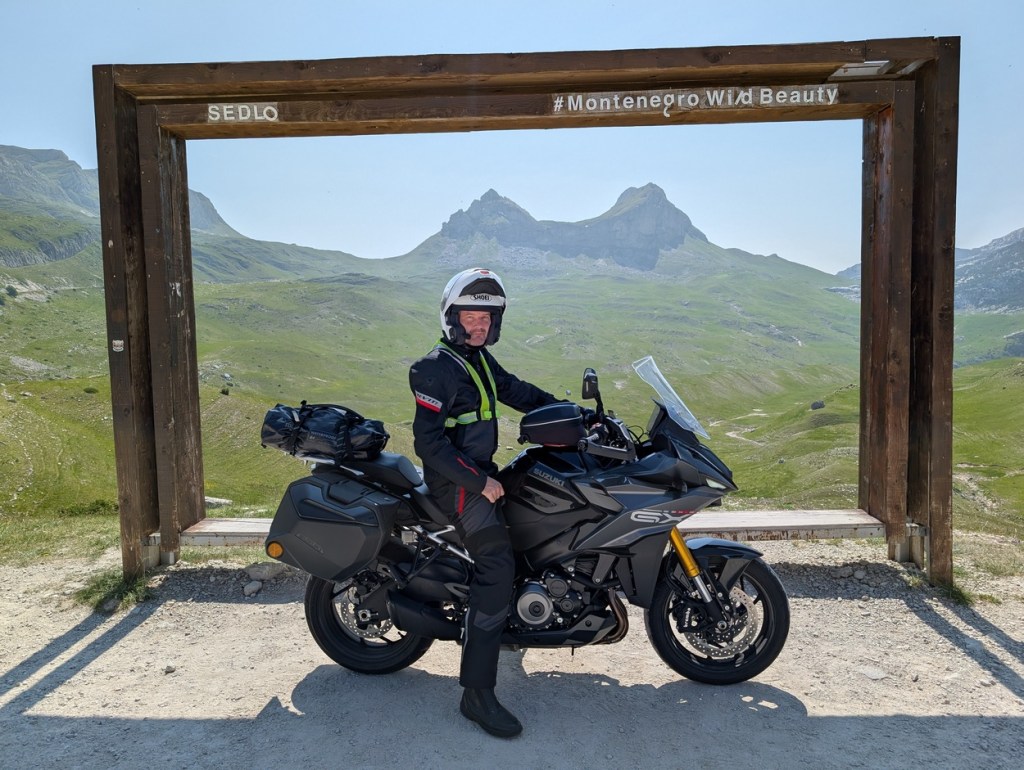
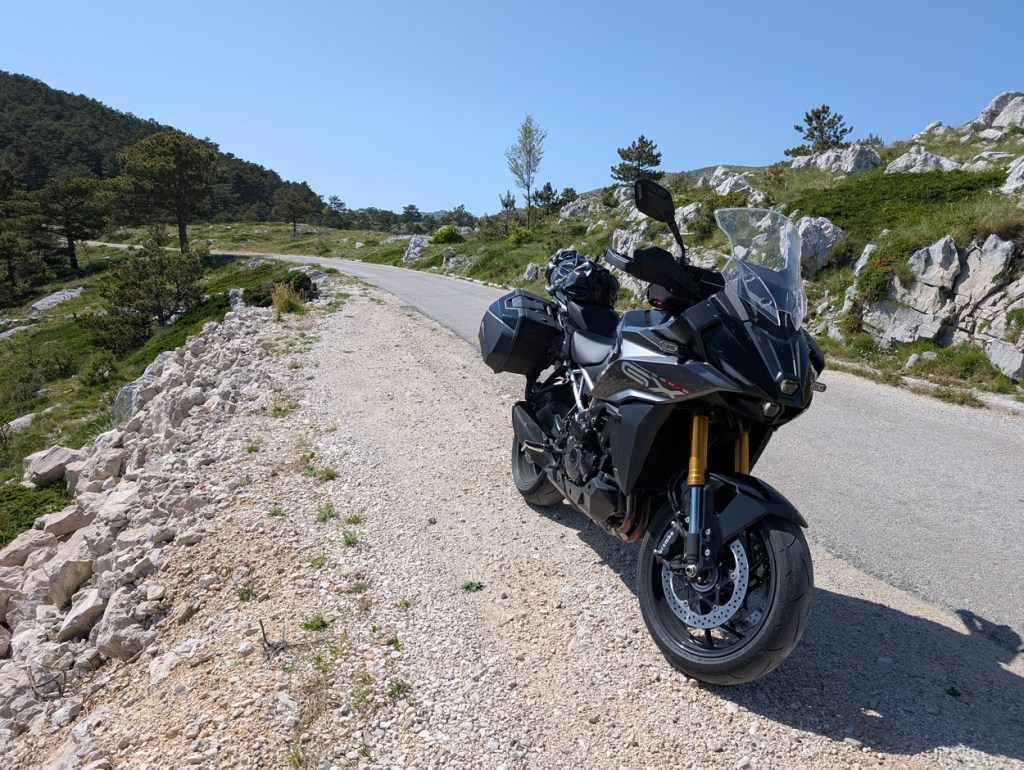
Durmitor National Park in Montenegro has fired up my imagination for years. With its jaw-dropping karst landscapes, turquoise mountain lakes and deep canyons, it’s easily one of Europe’s most breath-taking nature parks. But it’s not exactly around the corner. “Ideal for a sporty touring bike adventure,” I suggested at the editorial table. Suzuki liked the idea too and that’s how I ended up blasting my way to the Balkans on a GSX-S1000GX.
Suzuki’s GSX-S1000GX is their answer to the ever-growing crossover segment: a mix of the comfort and long-travel suspension of an adventure bike with the sharp handling of a road-focused 17-inch-wheeled naked.
Suzuki gave the GX a sharp, angular design. It’s clearly part of the same family as the GT. With its twin stacked headlights and narrowed “side eyes”, I think it’s a seriously good-looking bike. The finish is top-notch and the cockpit feels clean and calm thanks to the absence of exposed cables or awkward gaps.
The GSX-S1000GX is Suzuki’s first motorcycle equipped with adaptive suspension. Judging by the way they showcase it in the brochure, they’re clearly proud of it. But it doesn’t stop there: the GX is packed with electronic rider aids. Suzuki bundles them under the name S.I.R.S. or Suzuki Intelligent Ride Systems. Listing them all would take too long. Best to hop on, ride, and discover them as you go.
My plans take me to the Croatian coast in two days, though I hadn’t accounted for the fact that half of Germany and Austria would be heading in the same direction at the exact same time. The result: massive traffic jams. But also: perfect conditions to Continue reading →
For years there’s been a Triumph Street Triple 765 RS sitting in my garage. I barely ride it, and after every riding season I say with full conviction: “next year I’m selling it”! Yet every spring, it manages to seduce me into taking it for a spin, and bam! That addictive engine, sublime handling and phenomenal brakes never fail to plaster a giant grin across my face.
Unfortunately, that grin doesn’t last long. After half an hour, it turns into a doubtful grimace because the riding position is too cramped for my aging body. And when I tuck the bike back under its cover, I often find myself sighing: “Why doesn’t Triumph make a taller Street Triple?”.
When Triumph introduced the Tiger Sport 800 last year, it felt like my wish had come true. But my first encounter wasn’t entirely positive. During my visit to EICMA, I named Triumph’s latest crossover the disappointment of the show: beautifully designed, but the seated test session was a letdown.
Curious to see if a week-long test ride could change my mind, I took the Sport to the Taunus mountain range in Germany, together with a group of riding buddies.
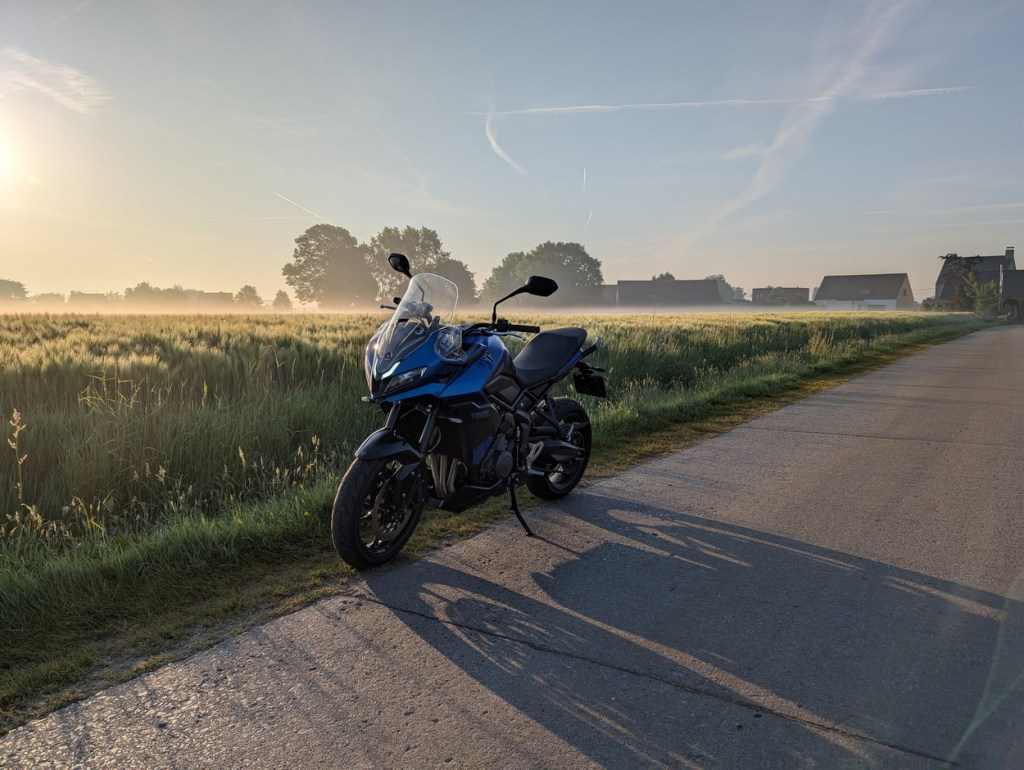
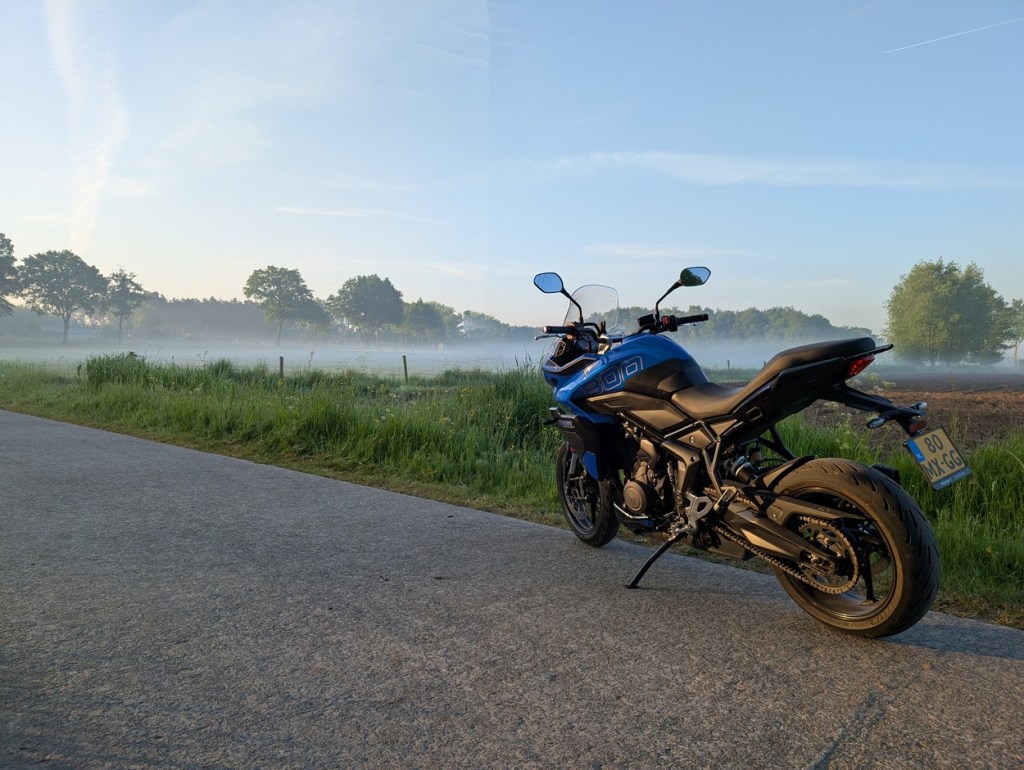
The 800 clearly inherits its styling from the Tiger Sport 660. Extra DRLs, wind deflectors and a bit more fairing at the bottom give it more presence, although it remains a very slim-looking bike. That impression is reinforced by the narrow tail section. The finish is – just as we’ve come to expect from Triumph – impeccable. Also striking: the visible exhaust. On the 660, the muffler is tucked under the bike.
The Sport 800 comes in four colors: Cosmic Yellow looks stunning but not very timeless, the grey version has the most class and the black one is the coolest in my opinion. For the test, I got the Continue reading →
Have you noticed how every year around October, you’re flooded with motorcycle news about the latest models? Well, you can experience all that excitement in person – and as one of the first – at EICMA in Milan.
EICMA is the ultimate place to be for motorcycle enthusiasts, the sacred ground where the biggest motorcycle fair takes place. The Esposizione Internazionale Ciclo Motociclo e Accessori is held in early November at the Fiera Milano, a massive exhibition center northwest of Milan. For a week, everything that’s new in the world of motorcycles is showcased for the press, industry professionals and the public.
Visiting EICMA had been on my bucket list for years, and this year I can finally cross it off!
How to get there
Getting to the EICMA motorcycle show involves a few practical steps. But don’t let that hold you back – in hindsight, it’s surprisingly straightforward. Here’s a quick breakdown:
EICMA runs for nearly a week, from Tuesday to Sunday. The first two days (Tuesday and Wednesday) are reserved for traders, press and influencers. From Thursday to Sunday, the event opens its doors to the general public. In early September, I booked a ticket for Friday at a price of €15. From mid-September, the price rises to €20, and tickets at the door cost €25.
I flew with Ryanair on Thursday evening from Brussels-South to Milan. But just as Brussels-South is not actually in Brussels but in Charleroi, Milan’s budget airport is located in Bergamo. From Bergamo, a shuttle bus (€10 one way) takes you to Milan Central Station in about an hour. From there, you can take the metro to any part of the city. For EICMA, hop on metro line 1 and get off at Rho Fiera, the final stop.
EICMA, here I come!
EICMA officially opens its doors at 9:30 AM, but like many other eager visitors, I arrived at 8:30 AM. Unsure of the exact entrance location (there are several), I followed the kilometer-long bridge with the poetic name Ponte di Mare, which cuts through the exhibition halls. It led me to a shorter line and conveniently to an entrance located between Halls 22 and 24. Unbeknownst to me at the time, this was where Suzuki and Yamaha were set up, two brands I was particularly excited to check out.
At exactly 9:30 AM, the doors opened. Once inside, it didn’t feel too crowded, though that would change quickly.
My main goal was to check out the major brands, focusing on the latest releases. Beyond that, I planned to Continue reading →
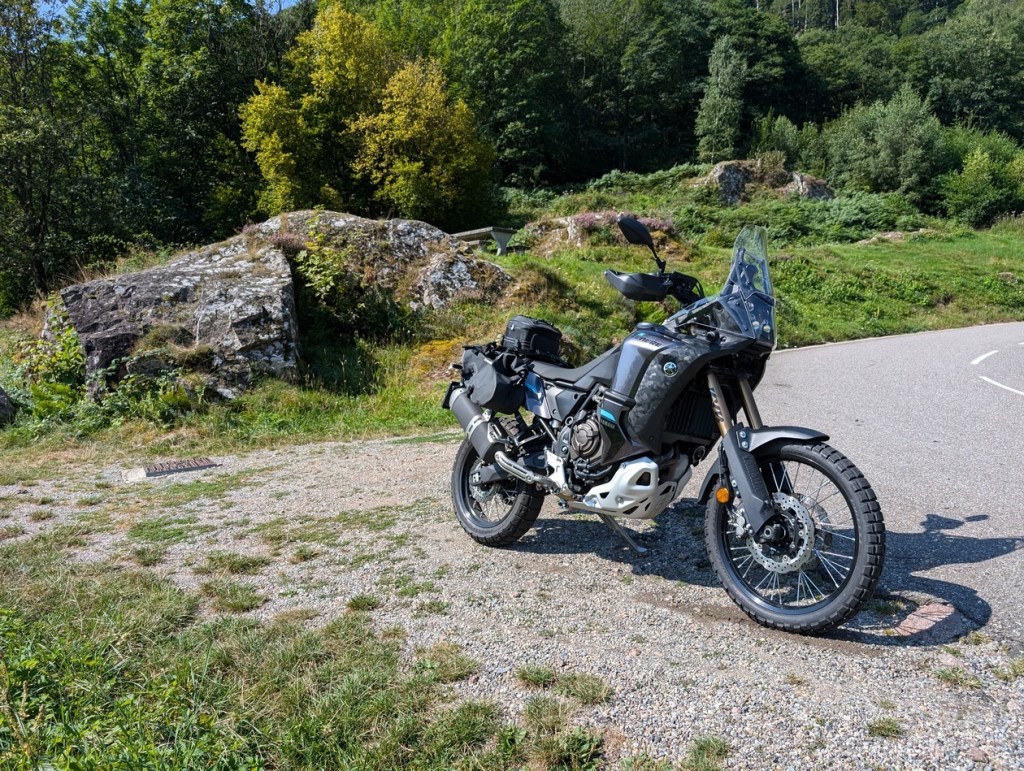
It’s already been five years since I attended the Belgian launch of the Yamaha Ténéré 700. In a short time, the T7 established itself as the reference within the mid-range adventure segment. The most common criticisms of the standard model were its somewhat limited range and the suspension, which was considered too soft for more serious off-road work. Yamaha addressed this by introducing four additional Ténéré models, offering something for everyone.
The Ténéré 700 Extreme has longer suspension travel and lightweight components, while the Ténéré 700 Explore offers shorter suspension travel and more comfort than the standard model. The World Raid is a T7 with a 23-liter tank and better suspension, and the latest addition to the line-up is the World Rally: a World Raid with a nice retro color scheme and goodies like an Akrapovic exhaust.
Electronics
When it comes to the equipment of the T7 models, we can be brief. The World Raid was the first one to feature a Continue reading →
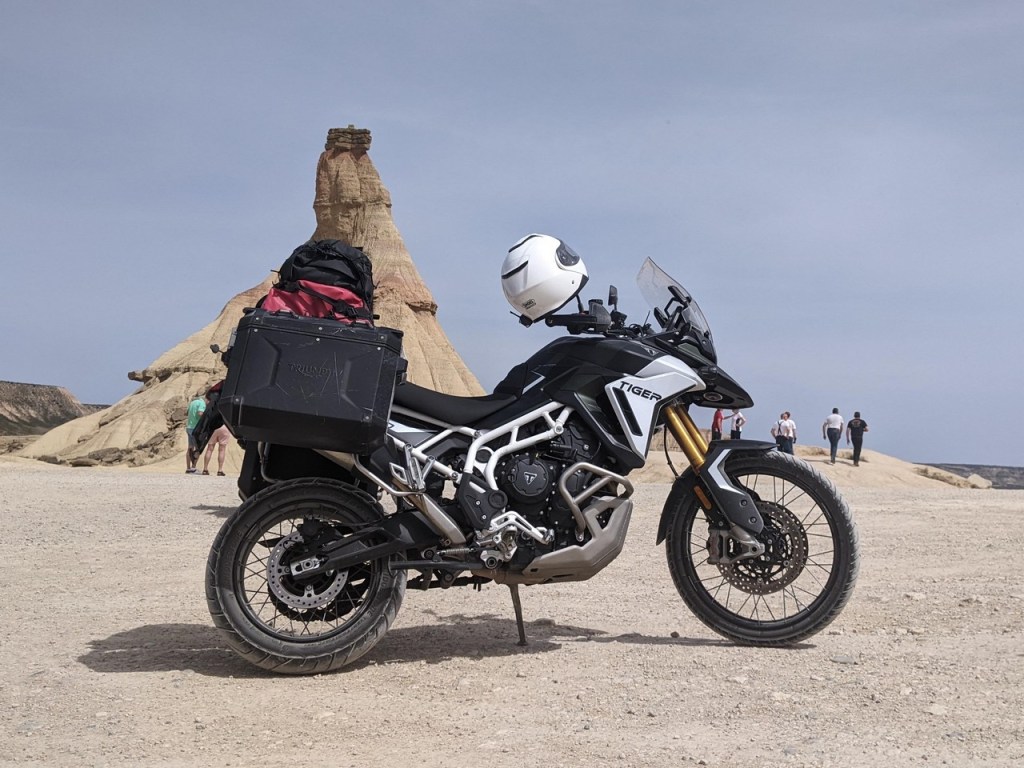
The Triumph Tiger has always held a special place in my motorcycling heart. When I tested the Tiger 800 XCA in 2015, I immediately ordered one. And even though I traded in that Tiger five years later for a big twin, my love for the three-cylinders from Hinckley is still strong. My Street Triple RS doesn’t rack up nearly as many miles as it deserves, yet it never fails to put a broad smile on my face every time I ride it. I’m curious to see if the same holds true for the new Tigers. That’s why I was eagerly anticipating taking the Triumph Tiger 900 Rally Pro on a week-long trip to the Picos de Europa.
New generation
In 2020, Jean tested the Tiger 900 Rally Pro in the Moselle region. For the 2024 model year, Triumph has refreshed its 900 lineup. The changes compared to the previous model may seem subtle, but they are far from it.
To start with, the number of Tigers (and specifically the 900 series) has been reduced from an overwhelming seven models to just three. Because it turned out that the vast majority of buyers opted for the lavishly equipped top versions. From this year on, there are Continue reading →




 Team Throttle