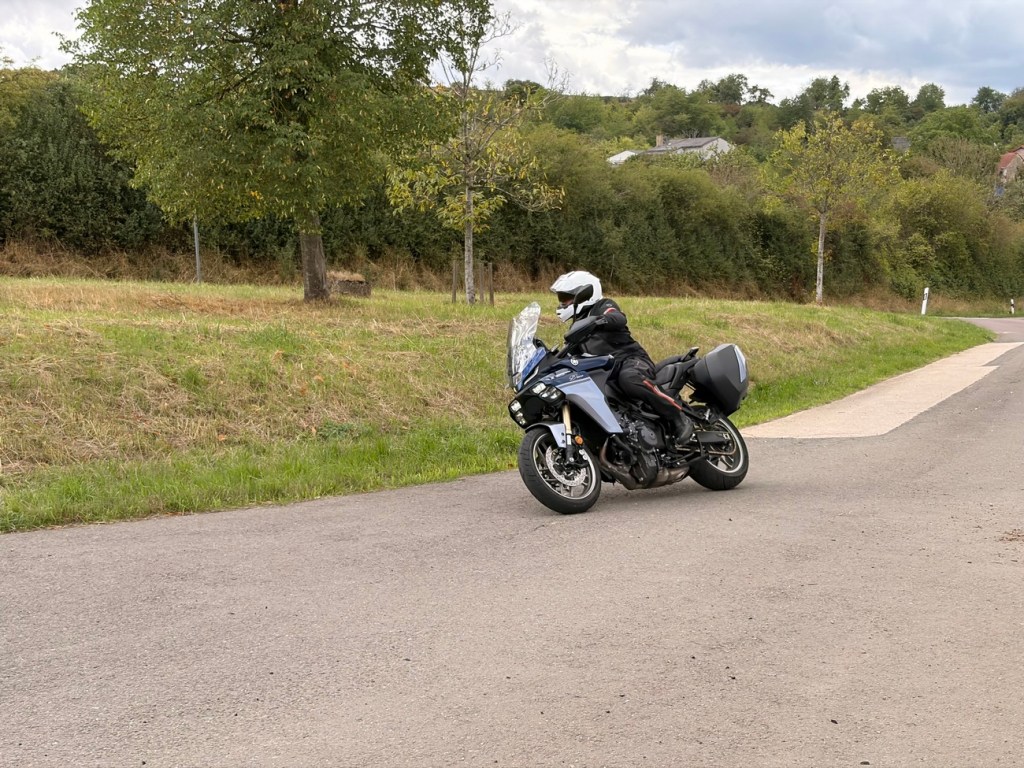
The Yamaha Tracer 9 is certainly one of the bikes we have a soft spot for, here at Team Throttle. We were fans back when it was still called the Tracer 900, and the same was true when we tested the Tracer 9 in 2022. Over the years, Yamaha hasn’t been sitting still. For the third generation of its popular crossover, the Japanese manufacturer has given the bike a pretty serious makeover.
Most of the changes are on the electronics front. We got our hands on the flagship of the range, the Yamaha Tracer 9 GT+. That little plus sign says quite a lot: this bike is absolutely packed with rider aids and clever gadgets. The highlights include KYB electronic suspension, radar technology, adaptive matrix LED headlights and Y-AMT, Yamaha’s “automated manual transmission”. Whether all this technology brings the Tracer 9 to a new level or actually takes some of the fun out of the riding, we set out to discover during a weekend in the Eifel region.
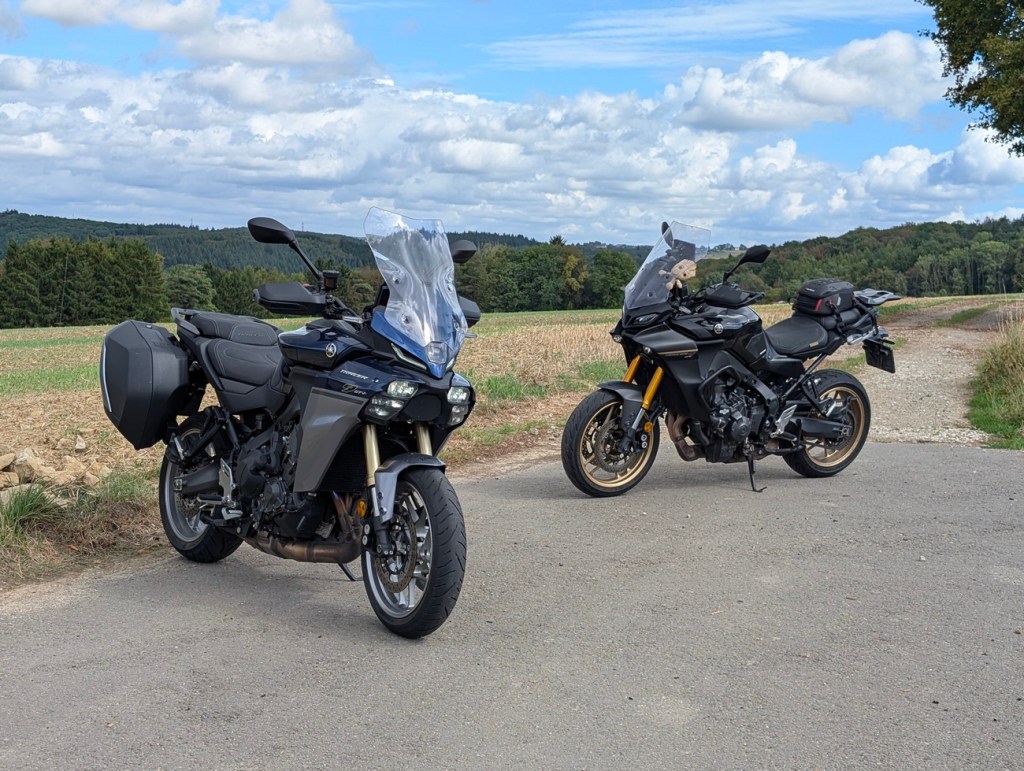
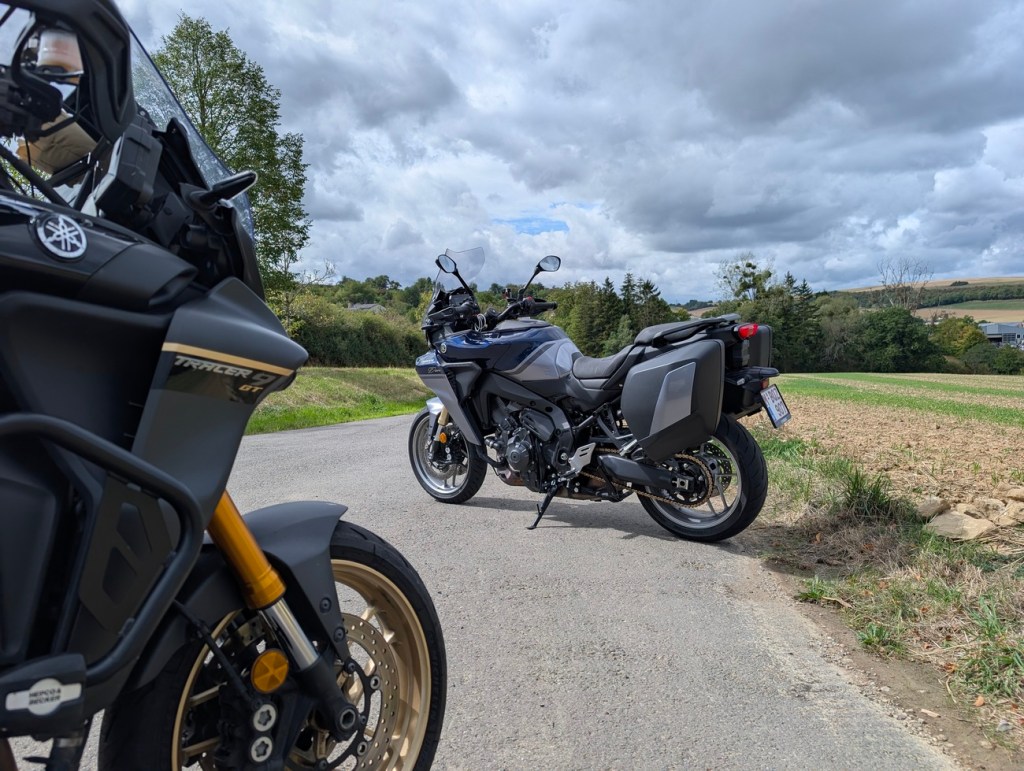
Joining us on that trip was the previous-generation Tracer 9 GT, complete with that two-piece Wall-E dashboard. Park the two bikes side by side and you’ll notice just how much has changed visually, although many of the differences are in the details.
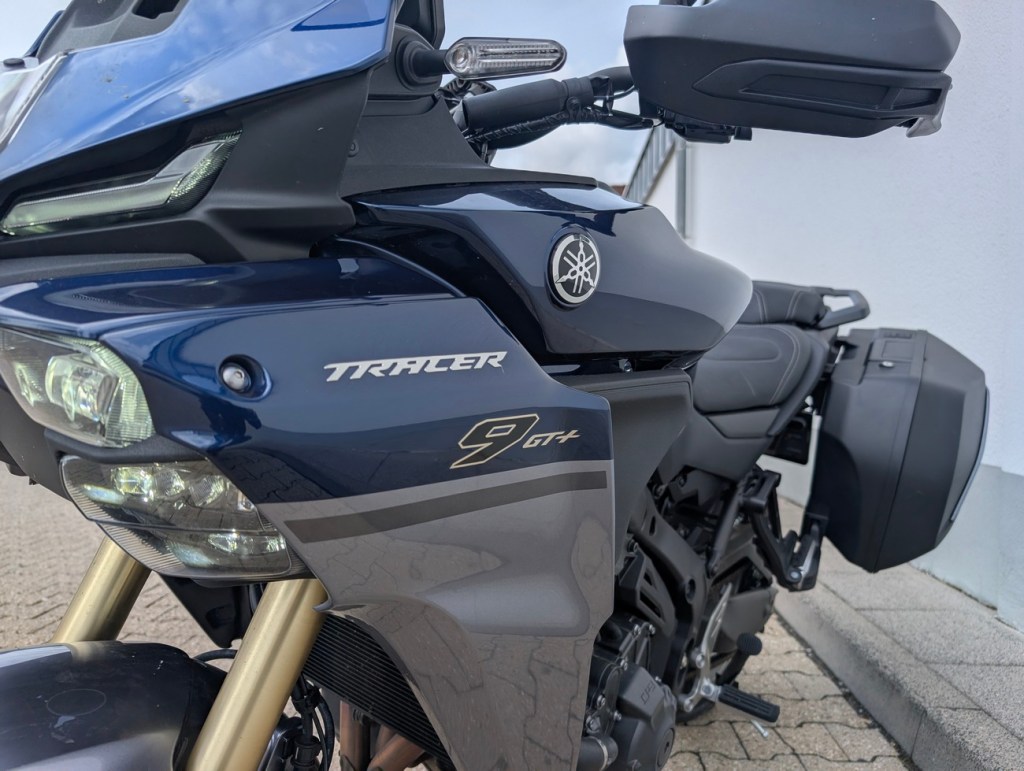
I wasn’t particularly convinced by the new design when it was unveiled at EICMA, and I’m still not. Viewed from the side, the front of the GT+ looks rather bulky. The culprit? The long fuel tank and equally substantial side panels. The matrix headlights dominate the front, while the rear has been kept relatively slim, with the radar neatly tucked away.
The GT+ is only available in two-tone colour schemes, with either blue or black as the dominant colour. The paintwork is absolutely gorgeous, and it’s only when the sun hits it that you really appreciate the depth of the finish. But you do have to like those two-tone combinations, because there’s no alternative. It’s a shame you can’t have the Tech Black finish available on the standard GT. That’s easily my favourite.
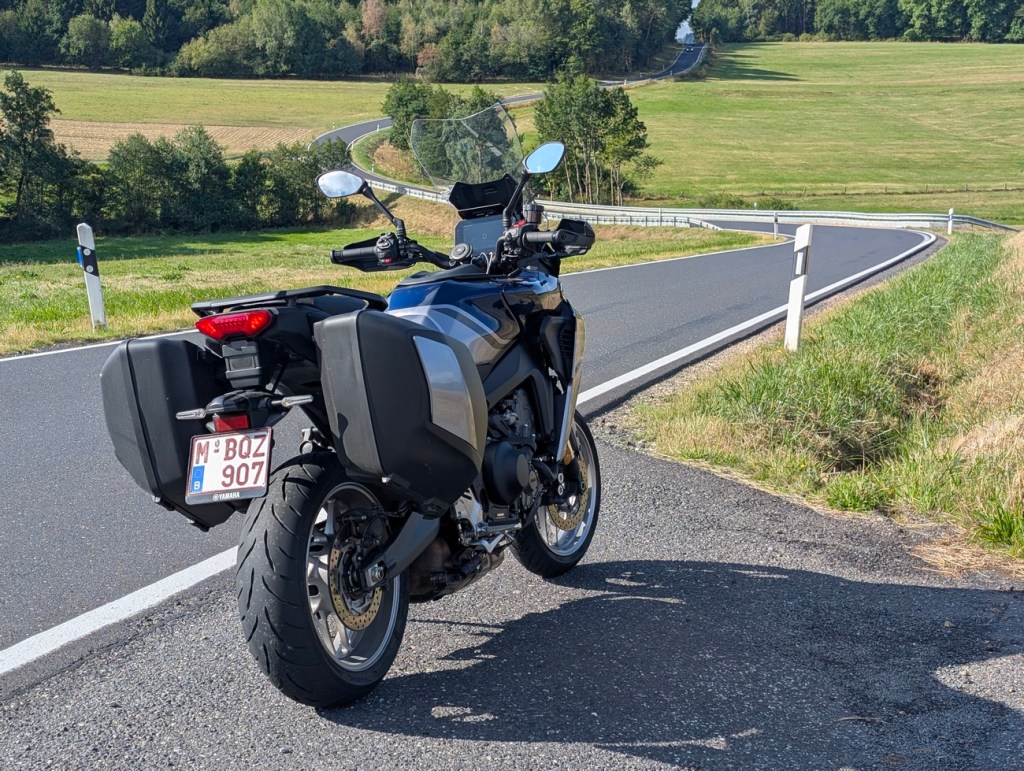
Settle into the comfort seat (standard on the GT+) and you’ll immediately notice that Yamaha has thankfully ditched the split dashboard. The lovely 7-inch TFT display offers three different themes and comes with – let me quote the manual – “Garmin Motorize connectivity for integrated navigation, while calls, messages and music can be received through the Yamaha MyRide app”. Quite a mouthful.
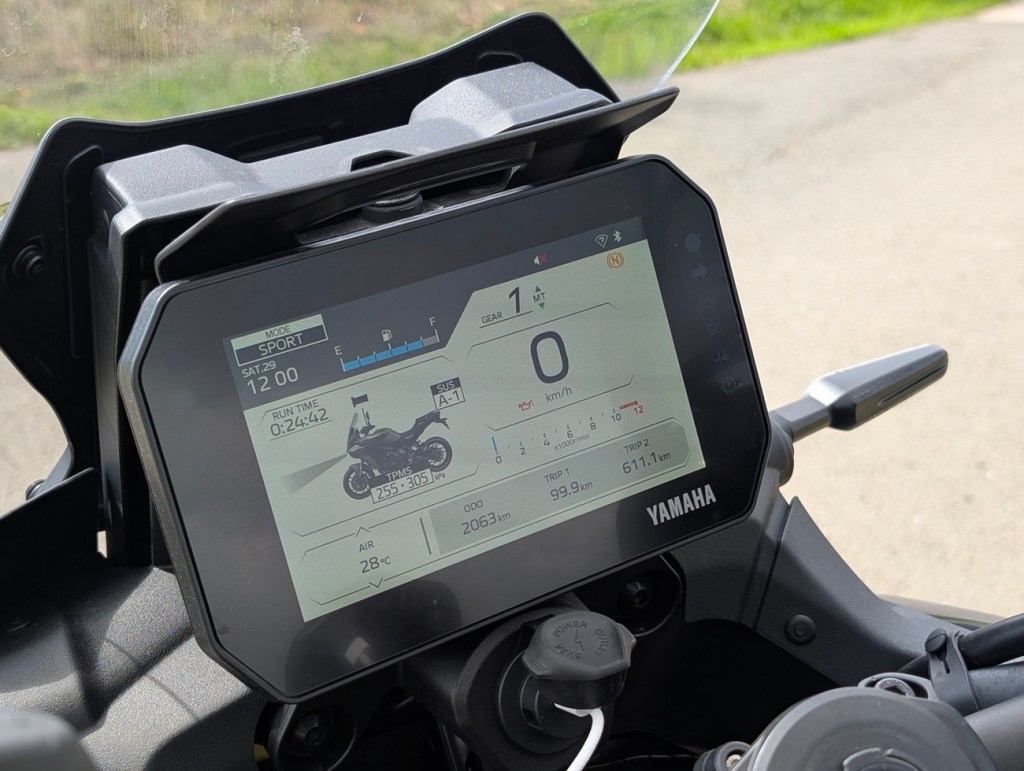
By the time I’ve finished reading that, I’ve already lost the will to try it out. (I did, by the way. No luck.) I find myself reminiscing about the CFMoto 1000MT-X, which connected to Apple CarPlay in about two minutes flat. That Chinese bike also had a better-finished cockpit, I realise, as I stare at the rather untidily routed cables on the Yamaha. A minor blemish on what is otherwise an impeccably finished GT+.
Thanks to Yamaha’s Automated Manual Transmission, or Y-AMT for short, the GT+ does away with both the traditional gear lever and clutch lever. My muscle memory occasionally makes me reach for something that simply isn’t there, particularly when coming to a stop, but you get used to the system remarkably quickly.
You can choose between shifting manually with your fingers (MT) or letting the bike do all the work in fully automatic AT mode.
In manual mode, gear changes are handled by two paddles. A tap on the plus button with your thumb shifts up, while your index finger takes care of downshifts using the minus button. It’s incredibly quick and silky smooth.
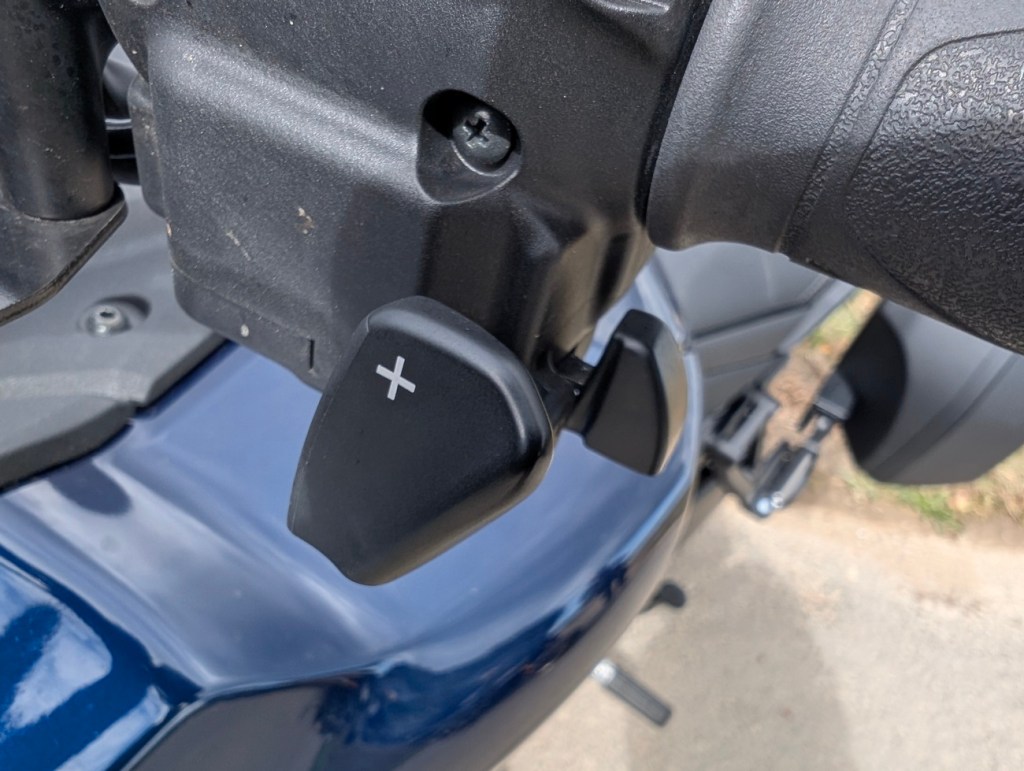
In automatic mode, you get two options: in D mode, the gearbox shifts at relatively low revs, while the D+ mode adopts a slightly sportier approach. The latter works surprisingly well, changing gear at almost exactly the moments when I would have done so myself. The regular D mode, on the other hand, is a bit of a lottery. The gearbox shifts at moments when you least expect it, often accompanied by such a hefty clunk that it could give a BMW GS gearbox a run for its money.
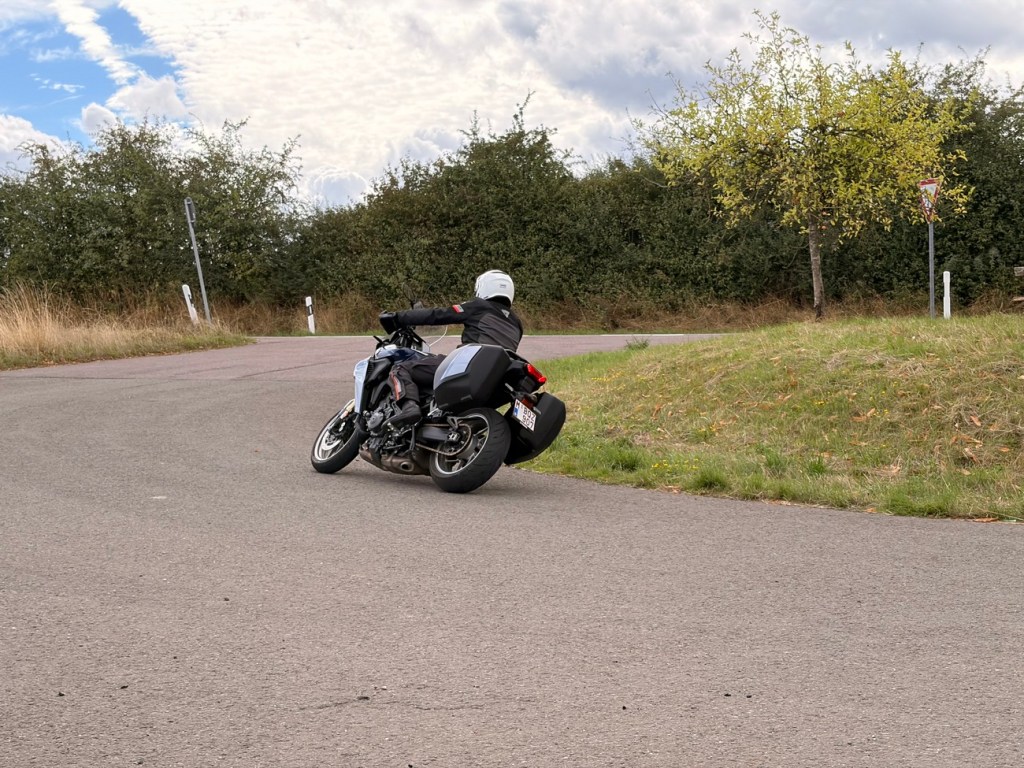
By now, you may have noticed that we haven’t actually said much about how the GT+ rides. There’s a reason for that. The sheer number of electronic systems is so impressive that, initially, it’s difficult to pay attention to anything else. Which suspension setting should I choose? Am I riding in automatic or manual mode? And should that be Street, Rain or Sport, or one of the two custom settings? Where was that electric windscreen adjustment again? And how do I activate the adaptive cruise control?
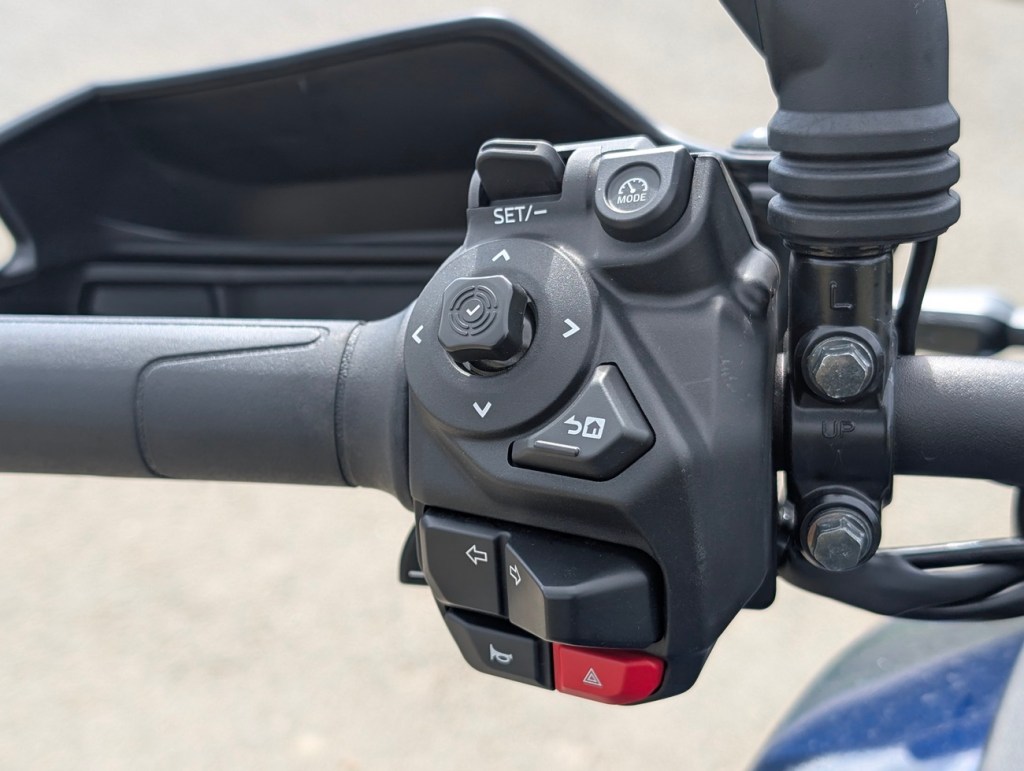
But don’t worry. A few kilometres down the road and you’ve pretty much got the hang of it all. That’s where Yamaha’s experience with the Tracer 9 really shows. With this third generation, everything has been developed to such an extent that most functions make perfect sense. The illuminated five-way joystick and clearly structured menus make finding your way around remarkably intuitive. Something the CFMoto 1000MT-X could certainly learn a thing or two from.
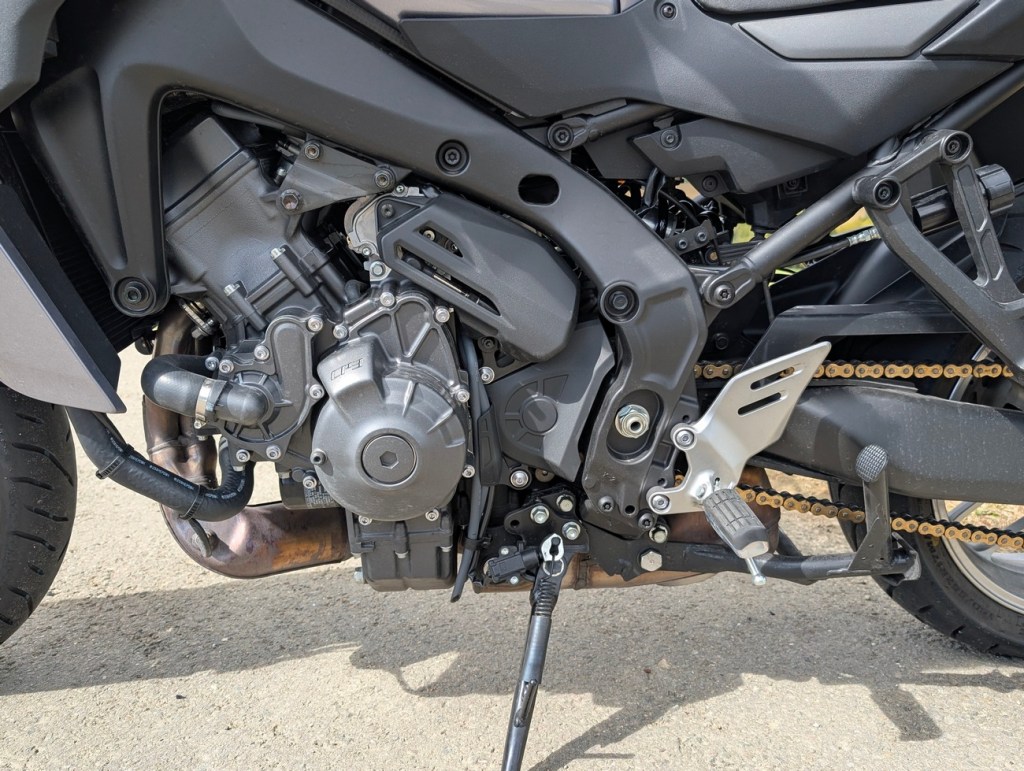
Thankfully, the heart of the Tracer remains unchanged. The 890cc three-cylinder engine, producing 119 hp and 93 Nm of torque, is still the star of the show. What an absolutely brilliant engine! From relaxed cruising to full-on hooligan mode, it does everything with ridiculous ease.
But, much to my surprise, the CP3 engine is actually outshone by what might well be the real star of this Yamaha: the electronic suspension. It effortlessly soaks up just about anything you throw at it, provided you’ve selected the right mode and settings. Add the lightning-fast gear changes in MT mode and the wonderfully progressive brakes, and you’ll understand why my Sena headset received more than one loud declaration of love for this sport tourer. What a machine!
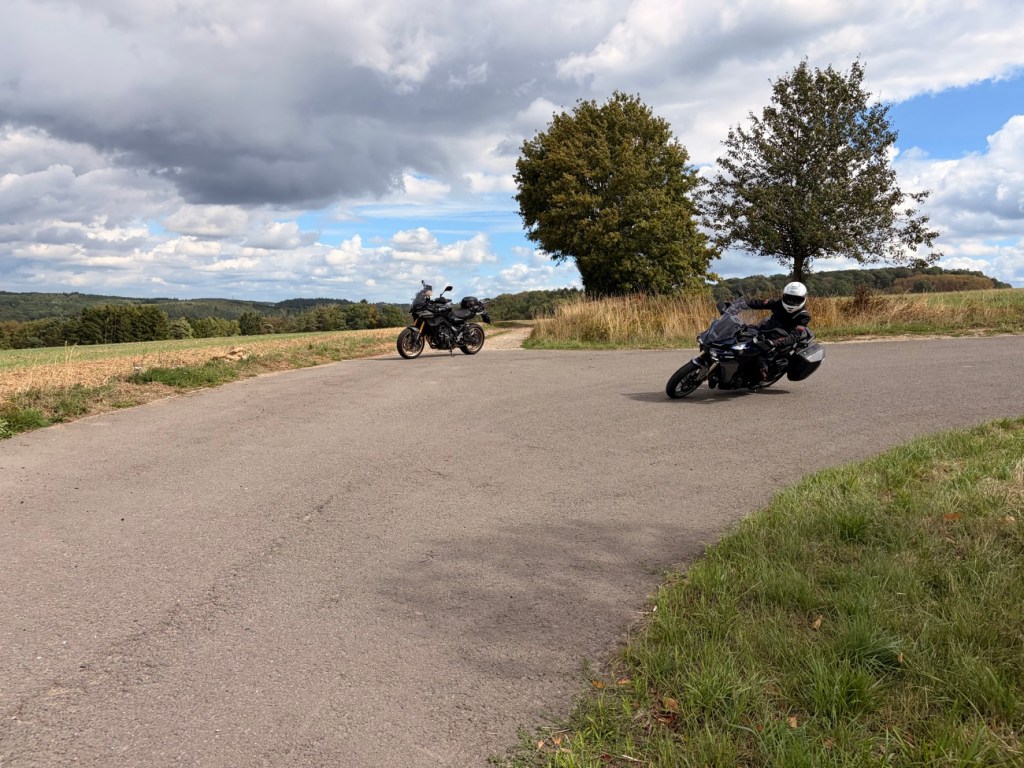
Compared to the previous generation, what strikes me the most is just how polished the new Tracer has become. Riding the two bikes back to back, I notice smoother gear changes, less snatchy throttle response and brakes that don’t bite quite as aggressively. The rough edges have been carefully filed away. You may or may not like that, but it certainly fits the overall character of the GT+.
I was almost ready to have the order form drawn up, were it not for the fact that Yamaha is asking £16.608 for the Tracer 9 GT+. That’s a serious amount of money for a 900cc motorcycle, especially now that an increasing number of well-built, considerably cheaper alternatives are entering the market.
Conclusion
It’s not often that a motorcycle test leaves me wanting to place an order there and then. It happened with my Triumph Street Triple 765 RS back in the day, and it’s happened again with the Yamaha Tracer 9 GT+.
All those electronic rider aids genuinely take the Tracer 9 to another level. More importantly, it’s the way all these systems work together that makes the whole package greater than the sum of its parts. Even the radar-assisted adaptive cruise control and blind spot monitoring work beautifully.
The icing on the cake is Y-AMT. I initially feared that an automatic gearbox would give the Tracer a scooter-like feel, but nothing could be further from the truth in manual mode. Quite the opposite, in fact: I’ve never shifted gears this quickly or precisely.
The only thing that stopped me from signing on the dotted line was the price, which is very steep for a motorcycle in this class.
Pros
+ Y-AMT
+ CP3
+ KYB
Cons
– The price
– Honestly, not much else
– Perhaps the colour schemes?
Tech specs
Engine type: 4-valves, Liquid-cooled, 3-cylinder, 4-stroke, DOHC
Displacement: 890cc
Bore x stroke: 78 x 62,1 mm
Compression ratio: 11,5 : 1
Maximum power: 87,5 kW (119 PS) @ 10.000 rpm
Maximum torque: 93 Nm (9,5 kgf-m) @ 7.000 rpm
Lubrication system: Wet sump
Clutch type: Multiple Disc, Wet
Ignition system: TCI
Starter system: Electric
Transmission system: Constant Mesh, 6-speed
Final transmission: Chain
Fuel consumption: 5L/100 km
CO2 emission: 116 g/km
Fuel system: Fuel Injection
Chassis
Frame: Diamond
Caster angle: 24°25′
Trail: 106 mm
Front suspension system: Telescopic fork
Rear suspension system: (Link type suspension), Swingarm
Front travel: 130mm
Rear travel: 131mm
Front brake: Hydraulic dual disc brake, Ø 298 mm
Rear brake: Hydraulic single disc brake, Ø 267 mm
Front tyre:
120/70ZR17M/C (58W) Tubeless
Rear tyre: 180/55ZR17M/C (73W) Tubeless
Dimensions
Overall length: 2.175 mm
Overall width: 900 mm
Overall height:
1.440 mm – 1.530 mm
Seat height: 845 mm – 860 mm
Wheel base: 1500 mm
Minimum ground clearance: 135 mm
Wet weight (including full oil and fuel tank): 232 kg
Fuel tank capacity: 19 L
Oil tank capacity: 3,5 L
Screen & connectivity
Screen type: TFT
Screen size: 7”
Smartphone Connectivity: MyRide
Adaptive Cruise Control: Yes

