It might seem like the Team Throttle editors have a soft spot for adventure bikes. But appearances can be deceiving because over the past few years, my personal preference has slowly started to shift. Why? Until 2020 I commuted 200 km by motorbike every day, rain or shine, summer or winter. Back then, a comfortable ride just made sense.
In recent years, however, I’ve been working much closer to home. Lane splitting seems useless because it hardly saves any time (though I must admit I still do a bit of it). The result? I’ve become a fair-weather rider, and a comfortable bike doesn’t feel quite so “essential” anymore. Fun and looks can carry a bit more weight now. Not that I find my Ténéré ugly – far from it – but a custom chopper or a cool naked is always welcome in my garage too.
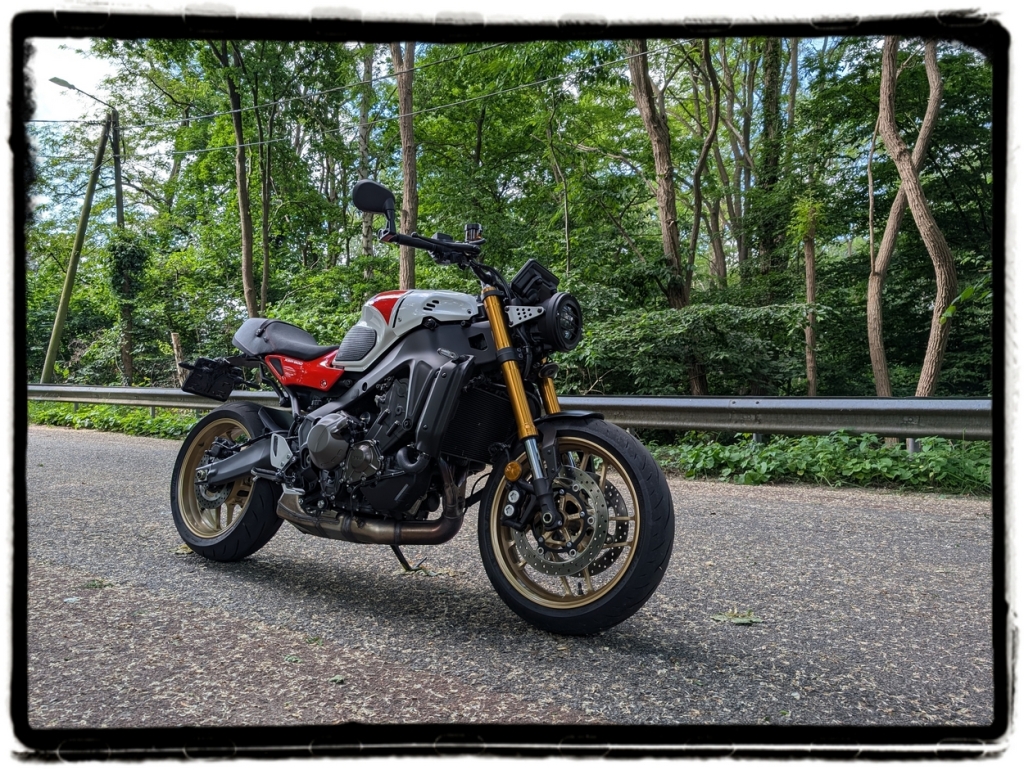
Enter the Yamaha XSR900. Built around the well-known and widely praised CP3 engine. The XSR is part of Yamaha’s Sport Heritage line-up: modern tech wrapped in retro aesthetics. For the XSR900, Yamaha drew inspiration from the 1980s, more specifically from the Deltabox frame that it introduced on its sport bikes back then.
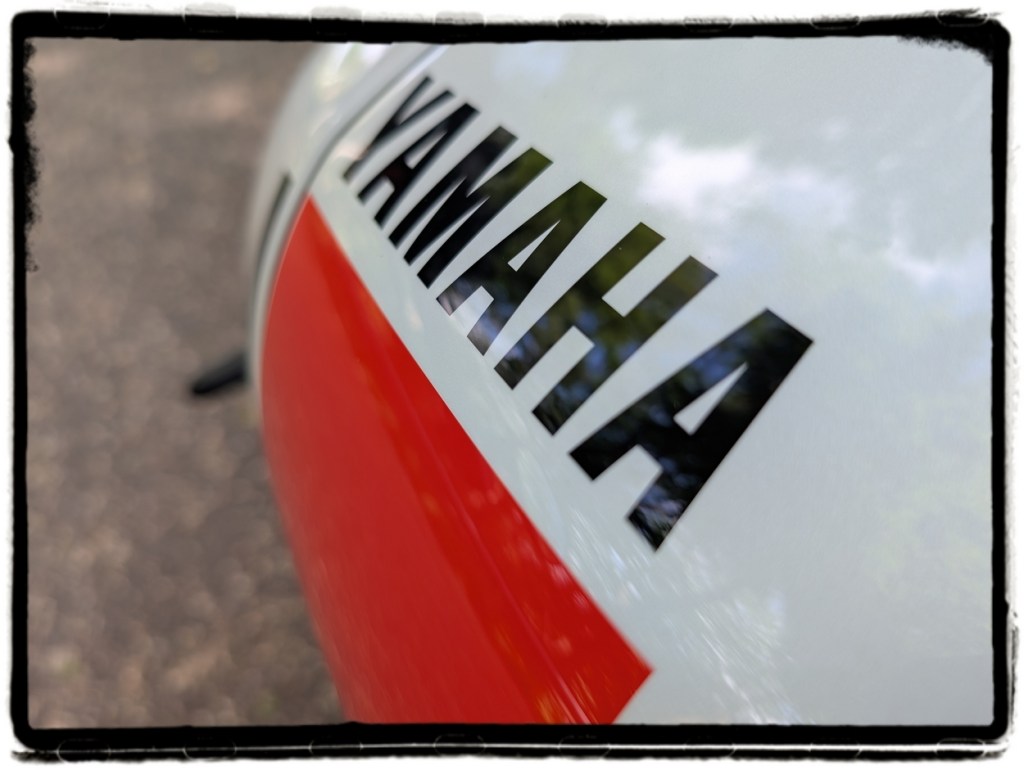
That doesn’t mean the XSR900 is a racing machine, but it definitely doesn’t look unathletic either. The white-and-red colour scheme of my test bike (black is the other colour option) add spice to its appearance, and the muscular silhouette and bar-end mirrors match the triple’s sporty character perfectly.

The riding position, on the other hand, isn’t sporty. It’s more of a relaxed sport-touring stance. Which means you’ll catch a lot of wind (and bugs) because after all you’re sitting on a naked bike. Long rides aren’t pure torture though. And I was glad the seat is just roomy enough to shift around a bit and avoid numb-bum territory.
The styling may be retro, the rest of the XSR900 is anything but. Finding cruise control onboard was a definite plus and I was surprised to see a speed limiter. There’s a quickshifter too, and it’s a brilliant one: up, down and virtually flawless. If it could just shift gears without cutting cruise control in a future update, we’d be golden. You like heated grips? You’ll find them on the options list.
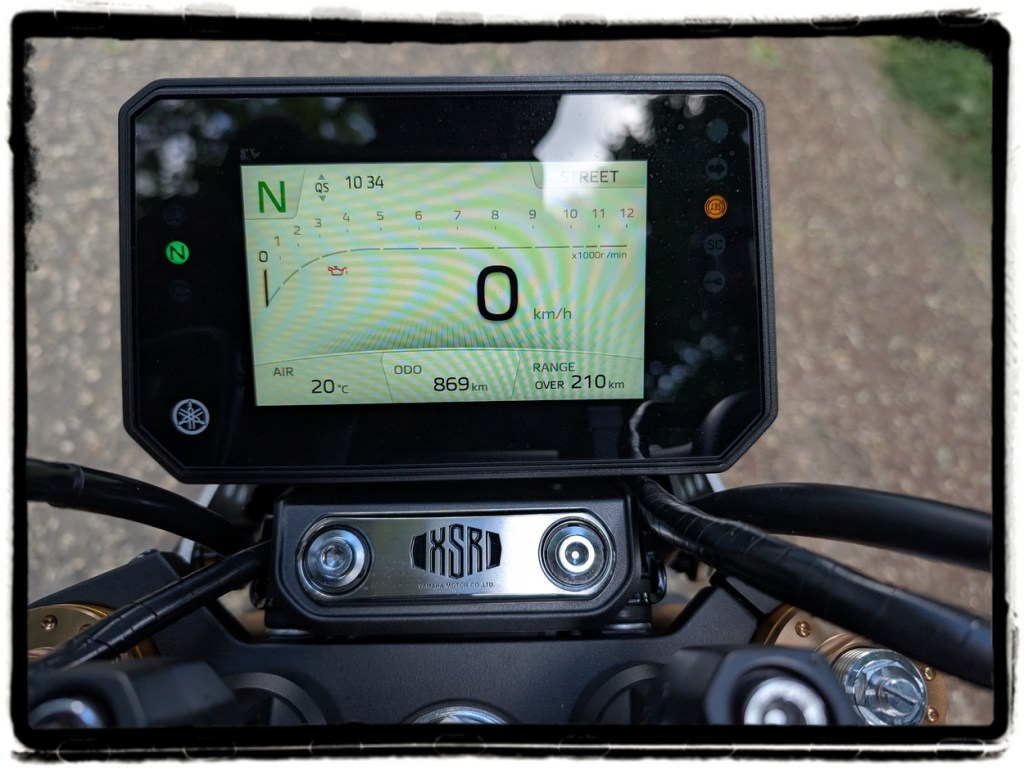
Also far from old-school: the display. The 5-inch TFT colour screen isn’t huge, but it shows all the essential info clearly and efficiently. The menu is logically structured, you can customise the three lower data fields, and there are four layout styles to choose from. The whole setup is easy to navigate thanks to the new joystick controller. Looking back at my previous Yamaha test (the Tracer 9 in 2022), one thing is clear: Yamaha made a massive leap forward in terms of user friendliness.
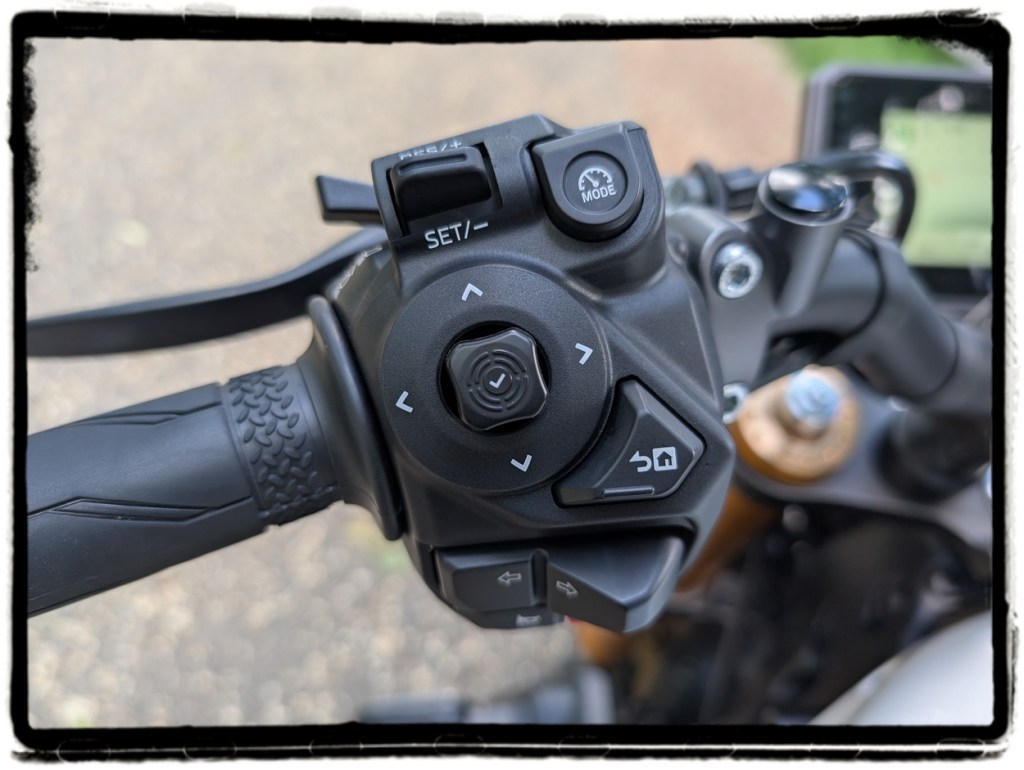
There is one downside to the display: visibility in bright sunlight. More specifically, the indicator lights for the turn signals can be hard to spot. “But Jean, just press the switch to cancel your blinker,” I hear you say. That brings us to downside number two. For some reason, Yamaha decided to install a turn signal switch where you push left or right to activate it, and then you have to push the same direction again to cancel it. Not a simple press in the middle, like on most bikes. Annoying, because if you’re unsure whether your blinker is still on, you can’t just instinctively press the centre. You actually have to glance at the screen to check. Not exactly ideal.
And while we’re discussing downsides, let’s go ahead and name number three: the mirrors. Sure, the bar-end mirrors look cool but they simply don’t offer enough visibility. In busy traffic, lots of lane changes and manoeuvring gets tiresome real fast.
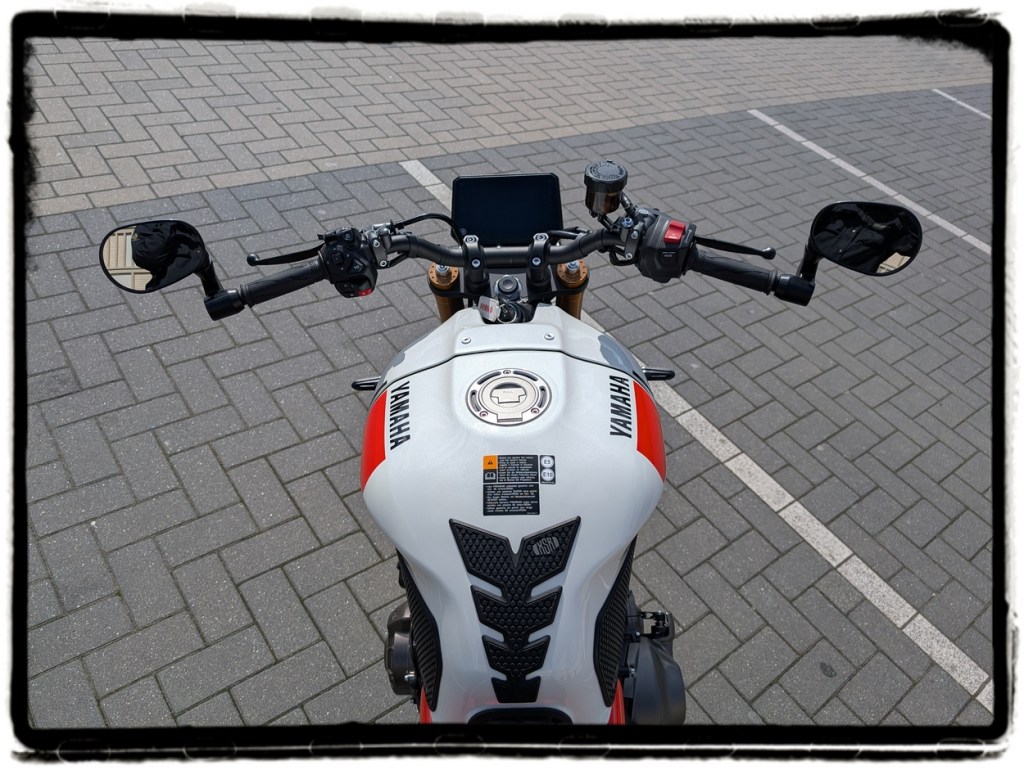
But those downsides simply can’t compete with all the positives the XSR900 brings. Starting, of course, with the three-cylinder engine that has been praised so many times. 119 hp at 10,000 rpm, 93 Nm at 7,000 rpm and countless amounts of fun. It pulls smoothly and powerfully from the very bottom, and there’s still plenty of punch up top. And thanks to the aforementioned exemplary quickshifter, the lightning-fast acceleration only gains in smoothness.
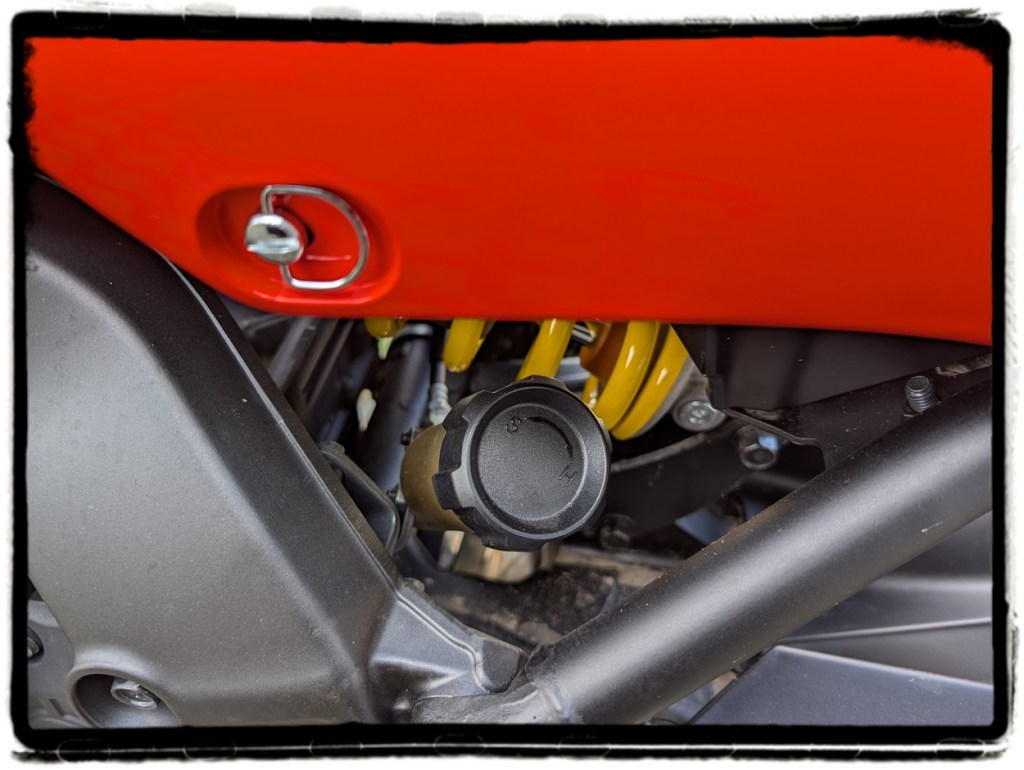
I can’t find any faults with its handling either. It steers light and precise, feels stable and reliable, and if you want to fine-tune it, the KYB suspension (front and rear) is adjustable. Brembo brakes are also on board: eager without biting too hard.
The throttle response is also perfectly tuned: the impulses from your right hand are translated into throttle reaction with great precision. If you choose the Sport riding mode, it’s a bit more aggressive but still perfectly manageable. Besides Sport, you have four other riding modes to choose from: Street, Rain, Custom 1 and Custom 2. In the last two, you can adjust throttle response, traction control, slip control and wheelie control in respectively 4, 3, 3, and 3 steps. By the way, traction control and ABS are lean-angle sensitive.
Finally, there’s the sound. When you walk around the bike, you might wonder: where’s the pipe? There isn’t one. The exhaust is located under the engine. For those who find that look too bare, an Akrapovic exhaust is available as an option. But even without the Akra, the XSR sounds far from bad, and you’ll happily rev the triple just to hear it howl.

Conclusion
Would I trade my own adventure bike for this Yamaha XSR900? To be honest, I don’t experience love at first glance, mainly due to some design choices that I personally don’t like (the high-rising seat, the hidden taillight, the license plate holder). The mirrors and the indicator switch also suppress the butterflies in my stomach.
On the other hand, this playful naked bike does something to me, ride after ride. By nature, I’m not the most sporty rider, but the XSR so easily awakens the hooligan in me. “Today, we won’t go crazy”, but five minutes later I’m already pulling off stoplight sprints. A true provocateur, this three-cylinder. Add to that the exquisite quickshifter and its nice handling: and voilà, the butterflies start fluttering!
Pros
+ Wonderful engine
+ Excellent quickshifter
+ Precise and solid handling
Cons
– Mirrors
– Indicator switch
Tech specs
Engine
Engine Type: 890cc liquid-cooled, DOHC, inline 3-cylinder; 4 valves per cylinder
Bore x Stroke: 78.0mm x 62.1mm
Compression Ratio: 11.5:1
Fuel Delivery: Fuel injection with YCC-T
Ignition: TCI: Transistor Controlled Ignition
Transmission: 6-speed; multiplate wet clutch; with Assist & Slipper clutch
Final Drive: Chain
Chassis
Suspension/Front: 41mm inverted fork, adjustable preload, compression and rebound; 5.1-in travel
Suspension/Rear: Single shock, adjustable preload and rebound damping; 5.4-in travel
Brakes/Front: 298mm dual hydraulic discs; ABS
Brakes/Rear: 245mm single hydraulic disc; ABS
Tires/Front: 120/70ZR17 Bridgestone® Battlax Hypersport S22
Tires/Rear: 180/55ZR17 Bridgestone® Battlax Hypersport S22
Dimensions
LxWxH : 84.8 in x 33.9 in x 45.7 in
Seat Height: 32.1 in
Wheelbase: 58.9 in
Rake (Caster Angle): 25.0°
Trail: 4.3 in
Max. Ground Clearance: 5.5 in
Fuel Capacity: 3.7 gal
Fuel Economy: 48 mpg
Wet Weight: 432 lb
 Team Throttle