Review: Honda X-ADV

It was on a drizzly winter’s day that I was reflecting on the coming motorcycle season. I wanted to try something different, something special. So I got in touch with Jean.
“I want to test a maxi scooter,” I said.
Silence. Then, with a hint of disbelief: “You want to test a scooter?”
“Yes,” I answered.
“A scooter?”
“Yes.”
Silence again.
“Which one?”

I know nothing about maxi or mini scooters, except that they’re highly popular in big cities. Just join the daily traffic jams on the Brussels Ring and you’ll see many of them lane-splitting. So I became curious about those maxi scooters. But which one should I test?

Soon I bumped into the Honda X-ADV. Not just “a scooter”, but one that claims to be in a class of its own: a motorcycle with the sitting position and the comfort of a scooter.

The X-ADV is part of Honda’s adventure range, which is justified by giving the X-ADV some adventure characteristics: a larger front wheel than on traditional scooters, adjustable front and rear suspension, switchable traction control, hand guards and a beautiful digital dashboard similar to the one of the CRF450 Rallye. Combined with tough “armored” colors and rugged Bridgestone tires, the X-ADV just looks cool.

Motorcycle or scooter?

Right from the very first meters I notice how agile the X-ADV is. Ideal for city traffic, where it really plays out its scooter nature. The sitting posture takes some getting used to. It’s upright, with wide handlebars, and feels a bit like an adventure bike. But my feet in front of me and nothing between my legs, that’s new to me. Yet, it doesn’t take long before I throw the scooter from one corner into another. When I stop at a pub, I can easily store my helmet in the 21-liter compartment under the seat.

When I leave the city and can pick up the pace, the X-ADV’s stability Continue reading
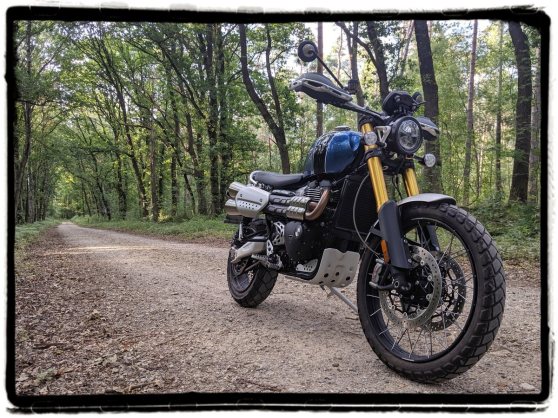
Review: Triumph Scrambler 1200 XE

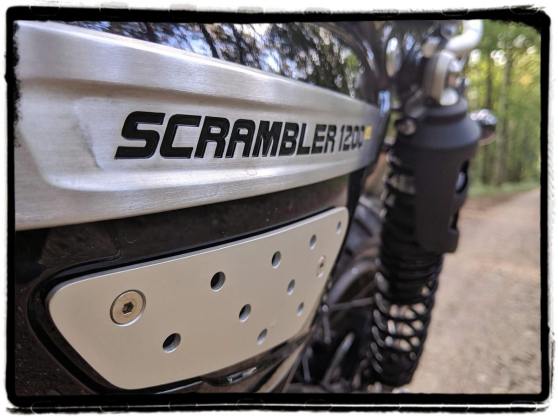
When Triumph announced the new Bonneville T120 and the new Thruxton at the end of 2015, that was just the beginning of the story of their all-new 1200 cc twin engine. In 2017 they introduced the Bobber, in 2018 the Speedmaster, and in 2019 they even released two new models with the parallel two-cylinder: the Scrambler 1200 and the Speed Twin. You can’t ignore that Triumph aims at a lot of different types of riders.

I was most curious about the Scrambler 1200. I had already met its smaller brother, the Street Scrambler, during an off-road training. A good-looking bike, but it had a hard time to convince me on unpaved tracks, which the “Street” in its name predicted. The Scrambler 1200 doesn’t have any “Street” in its name. Sounds promising.

So let’s hop on that seat of the Scrambler 1200 XE. With a height of 870 mm it’s even heigher than the Tiger 800 XCa. Not exactly the most exciting news for the short-legged.

Swag & high tech

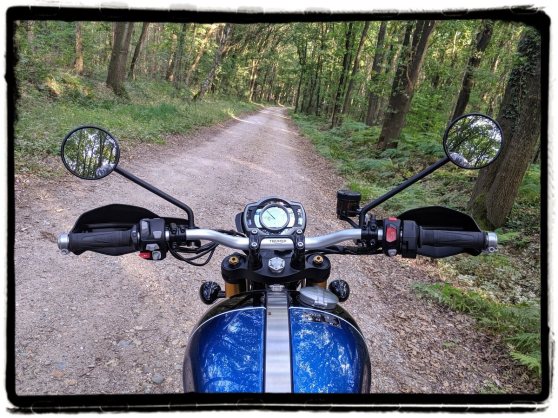
Once you sit on the seat, the dashboard and the controls on the handlebars will make you realize very quickly that this isn’t a back-to-basics scrambler. The 1200 has a modern TFT display and lots of buttons.

Not only is this scrambler packed with technology, it doesn’t lack swag either. The classic look and the finish of the entire bike, including the engine, are topnotch: very detailed and stylish. At the same time, the Scrambler 1200 XE has a Continue reading

Review: Moto Guzzi V85 TT

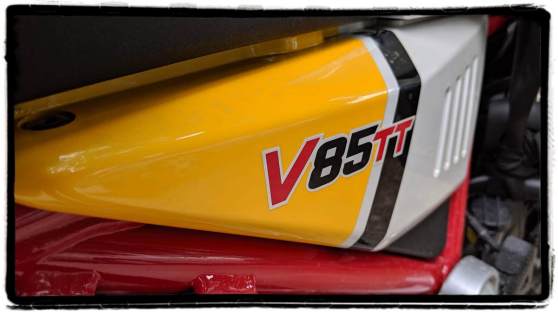
The midweight adventure bike segment is getting pretty crowded lately. We already double-tested the new BMW F 850 GS and the Triumph Tiger 800 last year, and this year the KTM 790 Adventure and the Yamaha Ténéré 700 are causing quite some buzz. You’d almost overlook an Italian bike that mingled in quietly: the Moto Guzzi V85 TT. A brand-new model with a brand-new engine.

I wouldn’t say the Guzzi is a direct competitor of the aforementioned four. For that, it lacks the off-road capabilities. Just look at its 19″ front wheel and the 170 mm suspension travel. The other four have a 21″ in the front and at least 30 mm more travel.

Nor does the V85 TT compete with the less off-road oriented Kawasaki Versys 650, Honda NC750X or Suzuki V-Strom 650. No, the Guzzi has something that these bikes don’t have, and that’s a good portion of emotion and a distinct look which also characterize the BMW R nineT Urban G/S and the Ducati Scrambler Desert Sled. These aren’t typical adventure bikes, but motorcycles that combine the sturdy looks of an adventure bike with a classic design and a distinctive engine.

Off to the Pyrenees!

I took the Moto Guzzi V85 TT for a trip to the Pyrenees (still working on the report). On that 4,464 km trip it regularly Continue reading

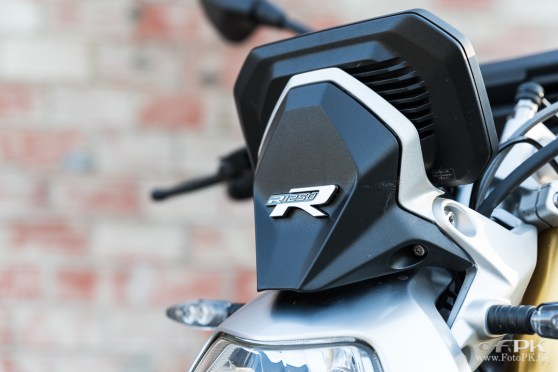
Review: BMW R 1250 R

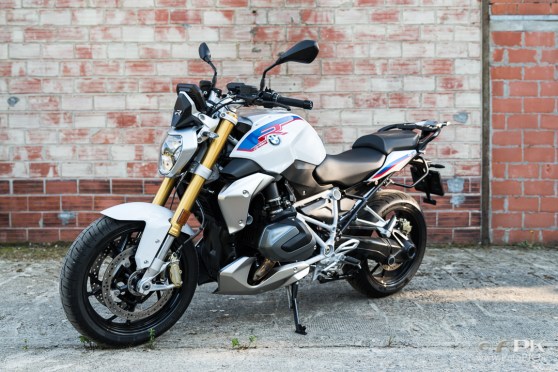
Can you imagine a BMW line-up without boxer engines? The emblematic image of the two bulging cylinders is inextricably linked to the brand. So probably BMW won’t bury their flat-twin any time soon. In any case, they continue developing it. Because the competition doesn’t stand still either of course.

One hundred years after the birth of the very first BMW boxer engine, the M2B15, BMW adds another chapter to its boxer book with the introduction of the brand-new 1250 two-cylinder. The new engine is available in four flavors: GS, RT, RS and R. With the latter you experience the flat-twin in its purest form.

All aboard the VVT train

The last 1200 boxer engine dated from 2013. With the development of the new 1250, BMW focused first and foremost on more muscle in low rpms. The engine displacement increased from 1,170 to 1,254 cc, the horse stable was expanded from 125 to 136 stallions, and the peak torque climbed from 125 Nm (at 6,500 rpm) to 143 Nm (at 6,250 rpm).

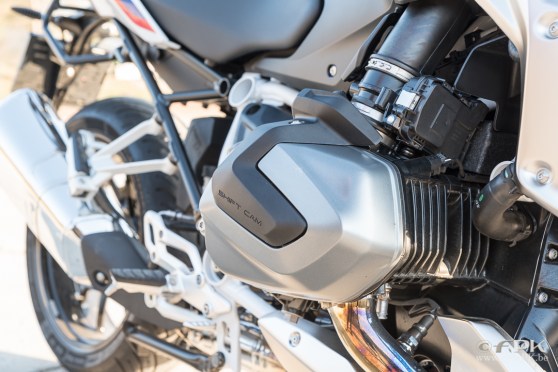
Next to those boosted figures, BMW makes its debut with the ShiftCam technology, also referred to as variable valve timing. While some brands have already been using this technique for years, the Bayern Boys are only now boarding the VVT train. The Euro5 standard seems to Continue reading

Review: Yamaha Tracer 700 GT

The “sport tourer” moniker probably brings big muscular bikes to mind, like the KTM 1290 Super Duke GT or the BMW S 1000 XR, or rather bulky long-distance runners such as the FJR1300 or the GSX1250FA.

Going fast is easy with those bikes but if you look for light-footedness in a sport tourer, you need to look somewhere else. Enter the Yamaha Tracer 700 GT.

For a few years now, the Yamaha MT-07 has been a popular model from which Yamaha smartly derives other models. The XSR700 already stole my heart in 2016 and now the (already reasonably touring-oriented) Tracer 700 gets an (even more) touring-oriented relative: the Tracer 700 GT.

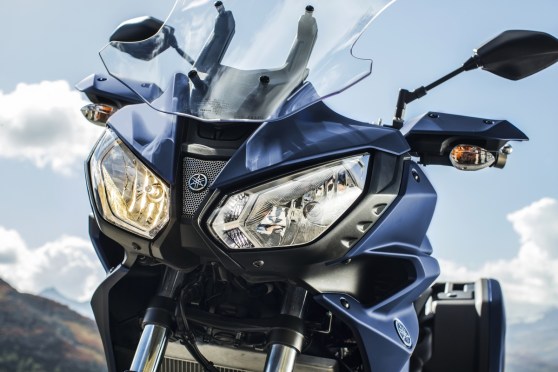
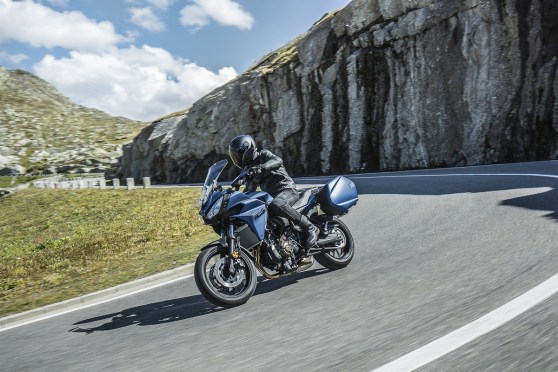
The Japanese kept it simple and drafted an easy upgrade: take a stock Tracer 700, exchange the windshield for a bigger one, replace the seat with a comfort seat and mount color-matched 20-liter side cases. There you go: the Yamaha Tracer 700 GT. Price for that suffix: £600, bringing the total to £7,999. That’s an attractive price tag. But isn’t the GT label too promising?

Hop on the comfort seat and you’ll immediately notice that the Tracer 700 GT doesn’t make an overwhelming first impression like the big sport tourers mentioned in the intro do. The Tracer feels compact and very manageable. At 835 mm the seat isn’t Continue reading

Review: Aprilia Tuono V4 1100 Factory

The Aprilia Tuono has a lot in common with its donor bike, the RSV4. It still looks a lot like the hypersport, even if it’s a naked bike. It has more body panels than other fat naked bikes on the market. Especially the windscreen is taller than what we are used to. It seems to invite you to tug yourself behind it at higher speeds. A mere sign on the horizon?

Equipment

The Tuono comes in two versions: the RR and the Factory. The Factory has everything what the RR has and adds a racy rear end, Öhlins everywhere and sportier shoes: Pirelli Diablo Supercorsa’s in a wider 200/55 rear tyre are standard on the Factory, while the RR gets 190/55 Diablo Rosso III’s. The Superpole Graphics are exclusive to the Factory. Besides that both models boast a very complete equipment level.

The electronics on this bike are impressive. Don’t say “traction control”, say “Aprilia Performance Ride Control”. It doesn’t just regulate a few thingies but computes real “assistance strategies”: ATC (traction control, adjustable in 8 positions on the go through flippers on the handlebars), AWC (wheelie control, adjustable during riding and softening contacts with the road), ALC (launch control, recommended only for the track), APL (pitlimiter, very practical in city traffic) and ACC (cruise control).

There is also Continue reading

Review: Yamaha FJR1300AS

FJR. What do these three letters stand for? Fast Joy Ride? Furiously Jumping Rhino? For Jackass Racers? Nope. The correct (and official) answer is Fast Journey & Ride.

Since many years the Yamaha FJR1300 has a permanent spot in the sports tourer segment. Yamaha introduced this model in 2001. Today it exists in three versions: the FJR1300A (the basic version), the FJR1300AE (with electronically adjustable suspension) and the FJR1300AS (everything from the AE plus a semi-automatic transmission). I had a date with the latter.

The AS, the most complete FJR model, costs £17,099. In return for that pile of pounds you receive a bulky package: generous fairing, electrically adjustable windscreen, two mappings, ABS, switchable traction control, height-adjustable seat, sidecases, electronically adjustable suspension, semi-automatic transmission, cruise control, heated grips, LED lights with front cornering lights, 12v socket, shaft drive. In other words, everything you need and more.

The FJR is perfect for long journeys. The sitting position on the wide seat is comfortable yet slightly bowed towards the handlebars. Yamaha sells the FJR1300 as a sports tourer and not as a pure touring machine, so that forward bend seems legit.

With the windscreen down, only your head’s in the wind. If you raise the screen, there’s minor turbulence around the helmet, depending notably on the traffic in front of you: behind a truck, your head will shudder more than when you’re flying down an empty highway. Also a minor (but subtle) Continue reading