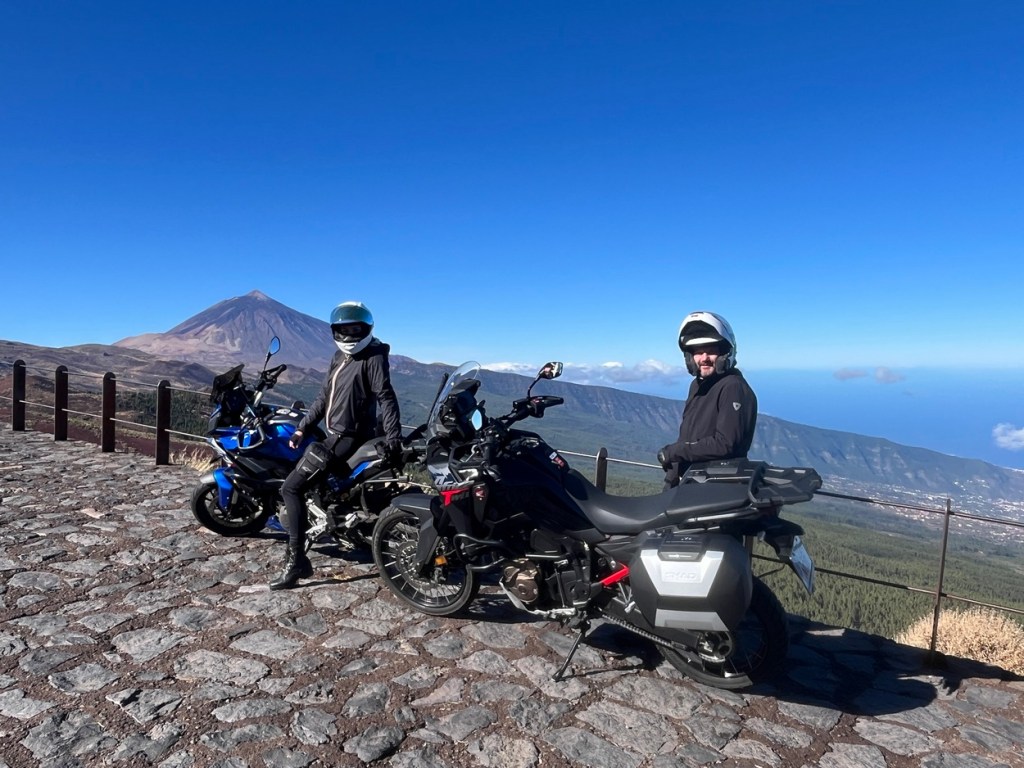
Fair-weather riders have tucked their bikes away and are counting the days until the first warm rays of spring. If you don’t want to take a winter break, Europe only offers a handful of destinations that really fit the bill. After previous winter rides on Madeira and Gran Canaria, Tenerife was this year’s chosen one.
The Canary Island is a popular destination for holidaymakers looking to escape winter. We set out to find out whether it’s also a great place for motorcycling. Short answer: “¡Sí, señor!” The long answer is waiting for you below, topped off with our four favourite roads on the island.
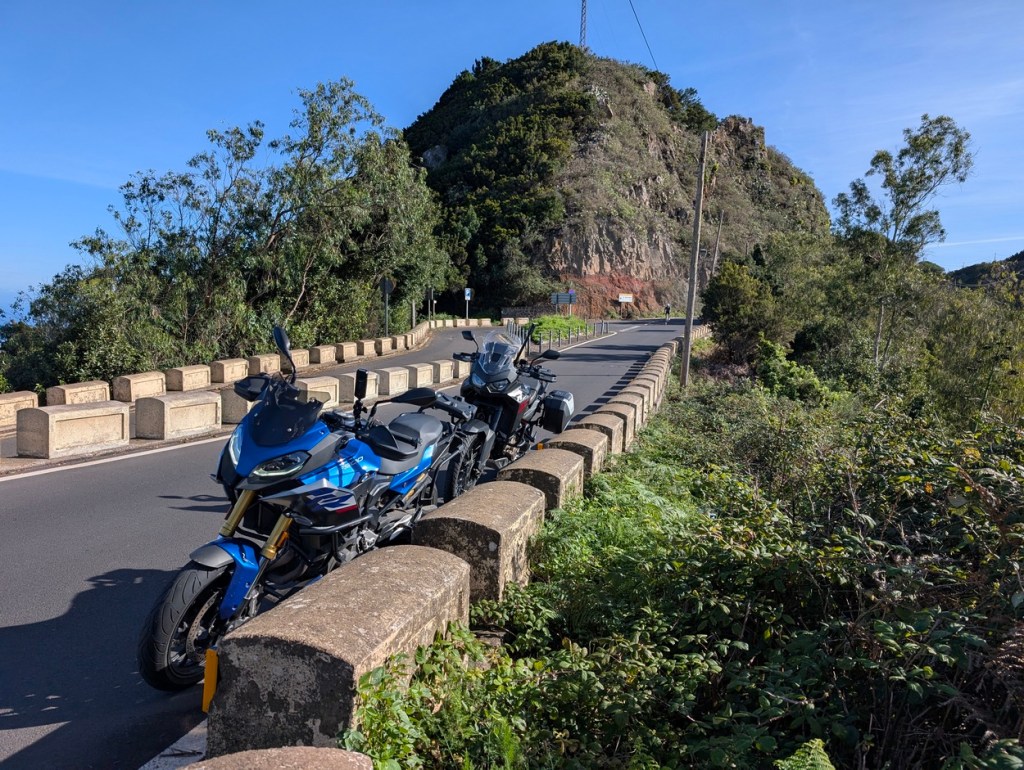
We rented our bikes from Canary Ride, an established name with its headquarters in Gran Canaria and a branch in Los Cristianos, in the south of Tenerife. Their fleet counts around 60 bikes on Gran Canaria and 23 on Tenerife, all recent models, all spotless, and all properly maintained. There’s something for every rider: from a big BMW GSA to a Triumph Speed 400 and everything in between.
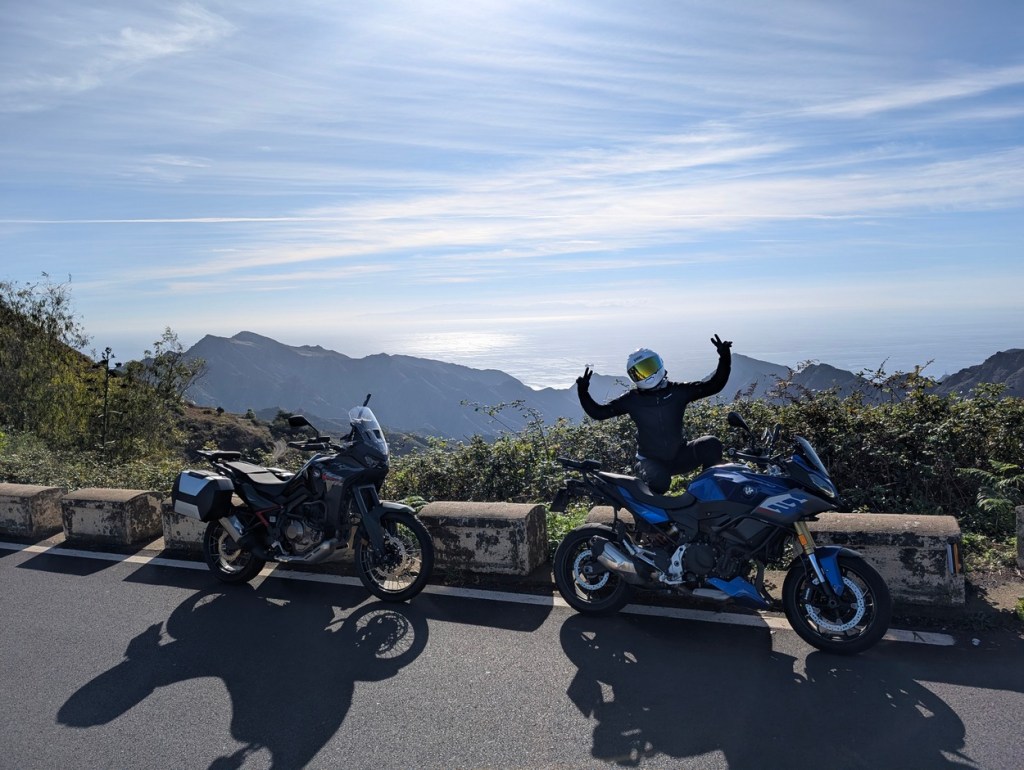
Booking is quick and straightforward via their website, with real-time availability for your chosen dates. We chose a BMW F 900 GS and a Honda Africa Twin for three days. Helmets are included and full riding gear is available for rent, but we opted to bring our own kit. A decision we didn’t regret. Riding in your own kit simply feels better.
All bikes are fitted with a wireless charging phone mount (Vikefon, a bit of an unknown brand, but a solid recommendation), making smartphone navigation a breeze. Our welcome at Canary Ride by Tino and Monika was exceptionally friendly, helpful, and efficient.
With the paperwork done, we pulled away under a blazing sun. But that didn’t last very long …
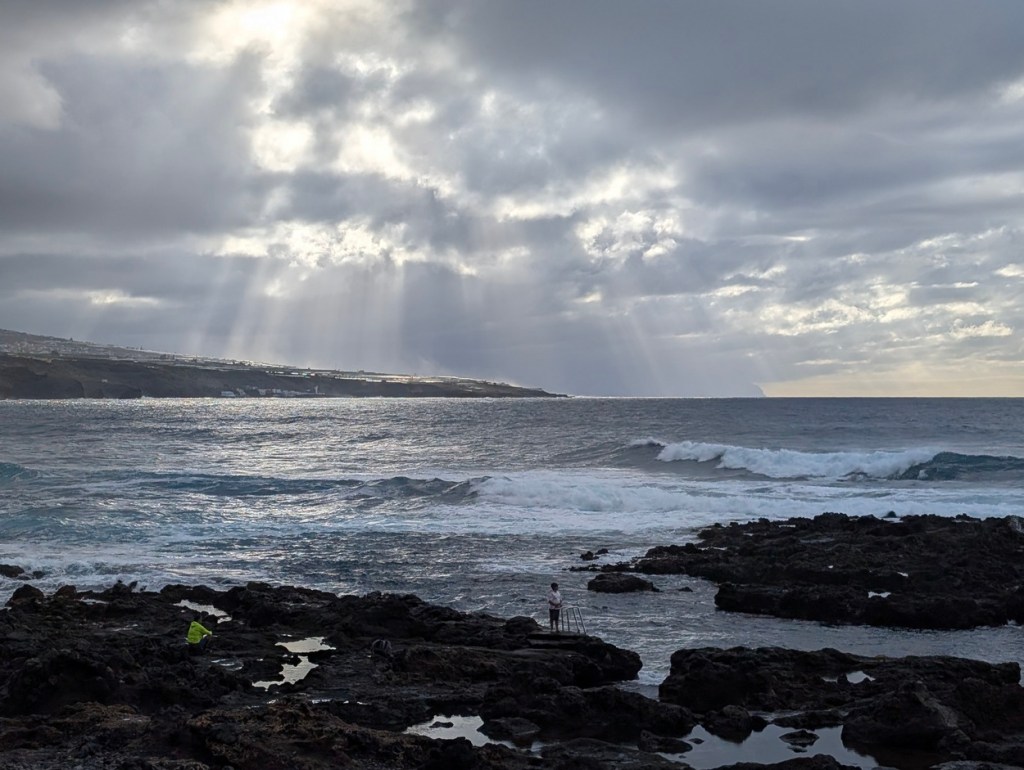
Tenerife is dominated by the ever-present El Teide. Towering 3,718 metres above sea level, the active (though currently sleeping) volcano sits right in the middle of the 90 km long island, influencing just about everything. Including the weather: clouds crash into the mountain and effectively split the island into two climate zones, causing conditions to change very quickly. We arrived just as storm Claudia rolled through and it didn’t take long to make its point.
After just 20 minutes of riding – climbing 1,700 metres in the process – we first hit thick fog and then rode straight into a downpour. We had packed rain jackets, but figured rain trousers wouldn’t be necessary. On the high plateau towards El Teide, climbing to around 2,200 metres, there’s nowhere to hide. Temperatures drop quickly, winds pick up, and the only option is to keep the throttle open and push through.
An hour later, the descent finally began and temperatures started to rise. On the western side of the island, the sun even made a reappearance. We warmed up, literally poured the water out of our boots, and let our clothes dry on the first sunny terrace we could find, fuelled by a café con leche. The rest of day one was sunnier, although we still ended it with wet (under)pants.
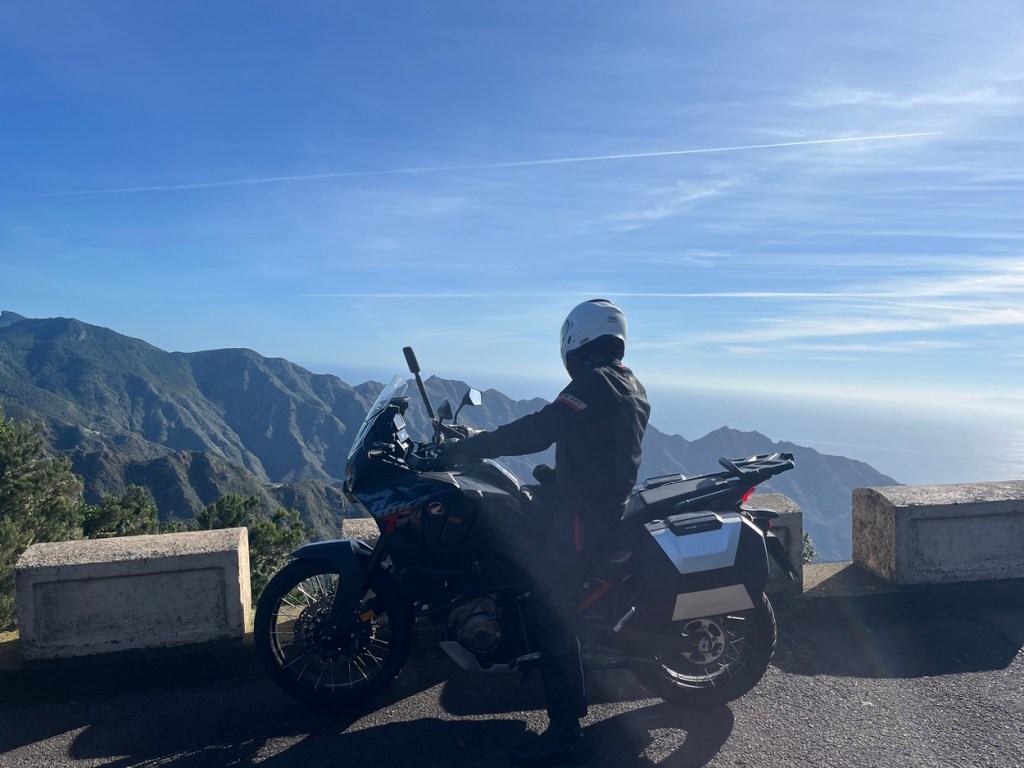
Thankfully, the days that followed brought much better weather. With coastal temperatures hovering around 26°C, the island of eternal spring showed its best side.
Tenerife is compact, and when riding from south to northeast you’re basically limited to three main roads, motorways aside. Want to rack up some proper mileage? Then riding certain stretches in both directions is simply part of the deal. The following four roads stood out for us. No strict ranking, although we’re kicking things off with our absolute favourite.
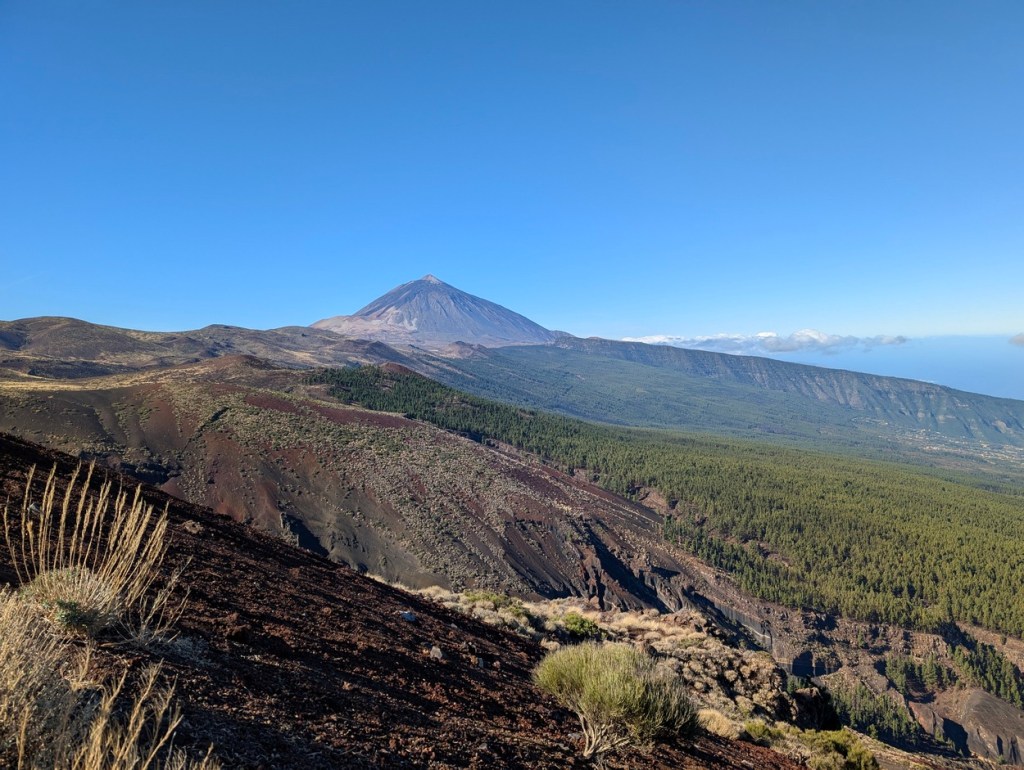
The TF-12 in the northeast of the island runs through lush green forests and cuts across steep mountain slopes, creating a stark contrast with the volcanic earth tones that dominate the rolling hills elsewhere on the island. The road is narrow and twisty, regularly offering stunning views of both the mountains and the sea.
On the opposite side of the island, the TF-436 takes you into Masca, a stunning little village tucked away in the Teno Mountains. It’s a popular destination, so expect company on the road. Including full-size buses that can barely squeeze through the hairpins. For some riders, that’s part of the adrenaline rush, for others it adds an extra layer of tension, especially with the steep drop-offs that leave little room for error.
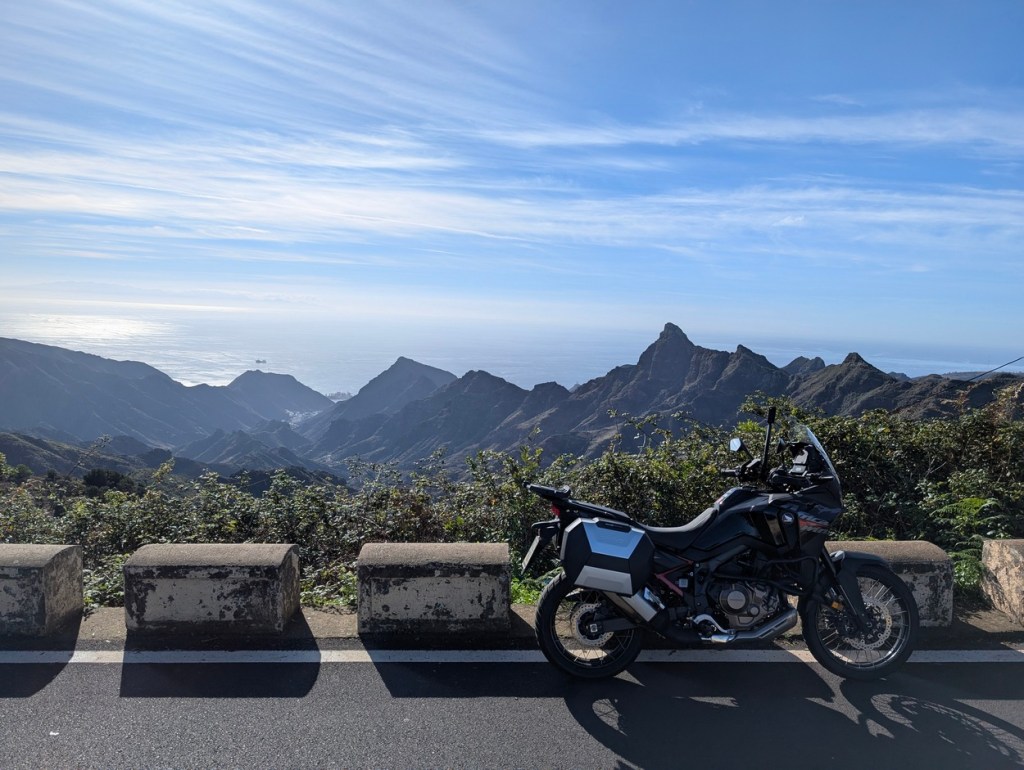
The mother of all Tenerife roads – and for many, the finest stretch of asphalt in all of Spain – runs from Puerto de la Cruz in the north all the way down to Granadilla de Abona in the south. At 72 km long, the TF-21 takes you straight past the mighty El Teide. The ride starts in dense pine forests before opening up into ever-changing volcanic landscapes, shifting colours at every turn. The long, uninterrupted views of the volcano are nothing short of spectacular. That said, it’s extremely popular and therefore often busy. Time it right, late in the afternoon, and most tourists will be gone, rewarding you with a stunning sunset. The trade-off? A higher chance of clouds. Up above 2,000 metres, temperatures dropped to around 15 degrees cooler than the coast, and in winter the road is occasionally closed due to snow.
The TF-28 may not deliver the same jaw-dropping views, but it more than makes up for it in riding pleasure. We dubbed it “the road with a million corners”. We didn’t count them, but it wouldn’t be far off. Running along the island’s southern flank, the TF-28 enjoys warmer temperatures and more sunshine than most other roads. And unlike the TF-21, villages pop up regularly, making it an ideal route for a relaxed lunch or coffee stop mid-ride.
Conclusion
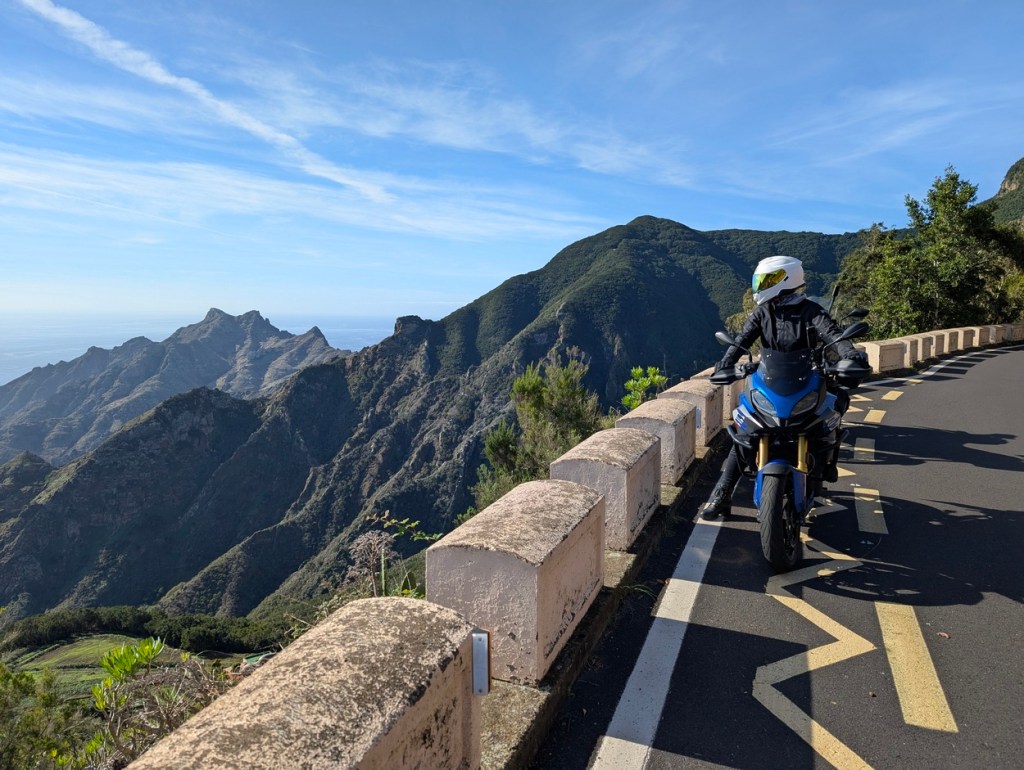
Mild temperatures, twisty roads with excellent asphalt and serious elevation changes: it’s a combo that makes Tenerife a brilliant destination for motorcycling. The island is compact, so a few days are enough to cover it thoroughly.
Our experience with Canary Ride was very positive. We paid €155 per day for the Africa Twin and €135 per day for the F 900 XR. An additional optional insurance cost €9 per day, while the panniers were €5 per day. Not cheap, but well worth it.
One golden tip from Canary Ride: take the ferry to Gran Canaria or La Gomera and extend your trip by a few extra days.
 Team Throttle