Three years ago, I tested the Harley Street Bob and I have to say, I was pretty smitten with its cruiser vibe. At the same time, it left me itching to try a Harley with more long-distance DNA (read: fairing and saddlebags), without having to climb aboard one of their weighty Touring models.
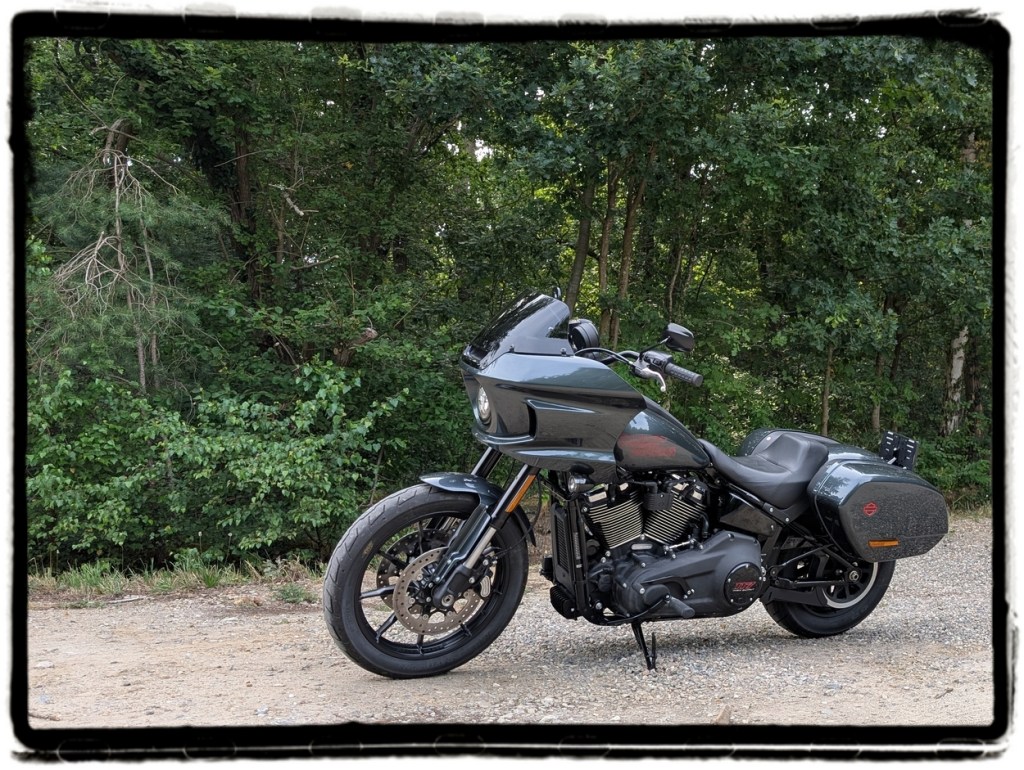
Enter the Harley-Davidson Low Rider ST, the fairing-and-bagged version of the Low Rider S and a proud member of the Cruiser lineup. The ST doesn’t hide where it got its looks. It borrows a hefty scoop of design sauce from the iconic FXRT of the eighties. Retro vibes galore! In fact, with those red letters on gray paint, my test bike looked like it could cameo in Stranger Things.
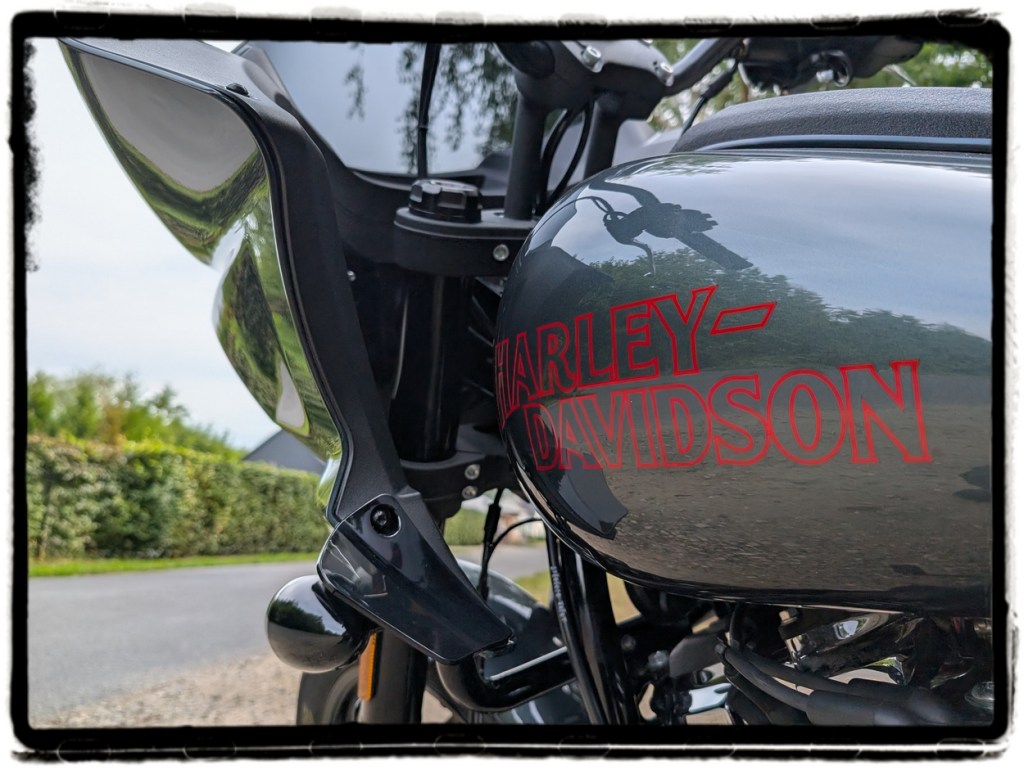
One walkaround of the ST and I’m already nodding in approval. The fit and finish are solid (with a special mention for that classic yet beautifully designed taillight) and in this blacked-out trim, the bike just looks plain cool. Worth noting: the ST comes standard in chrome (starting at $24,199), and if you want it murdered out, that’ll cost you an extra $1,100. Most paint options also come with a surcharge.
Not exactly cheap, but the ST isn’t some bare-bones, tech-free entry model either. Harley-Davidson is (finally) rolling out ride modes, lean-sensitive traction control (which you can switch off), cornering ABS and a slipper clutch across its lineup. And that’s about time. Bikes with a sportier edge should have that kind of tech baked in by now (says the guy daily-riding a Ténéré 700 with no ride modes, no TC, no slipper clutch and no cornering ABS).
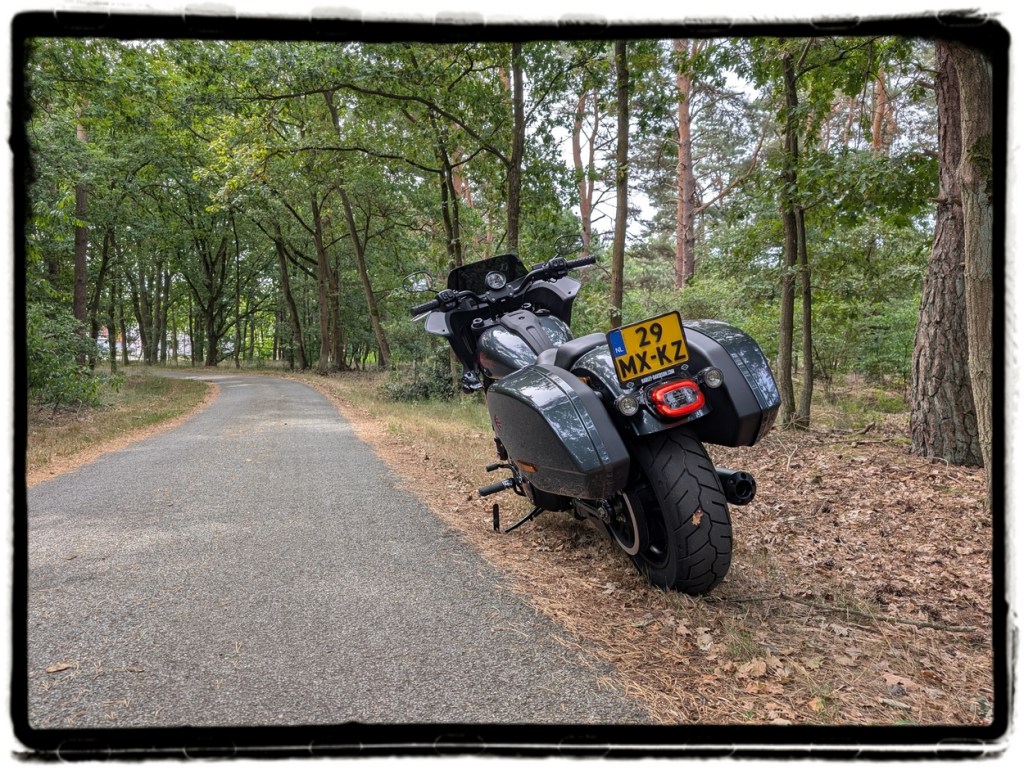
So does the Low Rider ST have a “sportier edge”? That first walkaround already hints at more than laid-back cruising: upside-down front fork, dual disc brakes and the most powerful version of Harley’s Milwaukee-Eight 117 V-twin. That engine comes in three flavors: Classic, Custom and High Output, or basically strong, stronger and strongest. The ST gets the High Output version, delivering 173 Nm (127 lb-ft) at 4,000 rpm and 114 hp at 5,020 rpm. For context: the Classic makes 156 Nm and 91 hp. Time to throw a leg over and see what this thing can do.

First impression? That clutch lever is heavy. Same goes for the brake lever and rear brake pedal. Definitely not finger-light controls. Looks like I’ll be putting in some work this week.
I head toward the Belgian Ardennes to put the Low Rider ST through its paces. First up: a stretch of highway to get acquainted. The slightly forward-leaning riding position is actually pretty relaxed, with mid-controls placed so your knees don’t feel cramped. Add to that the front fairing, which does a great job of redirecting airflow around your helmet and shoulders, and you know you’re in a good spot. Only your arms catch a bit of wind.
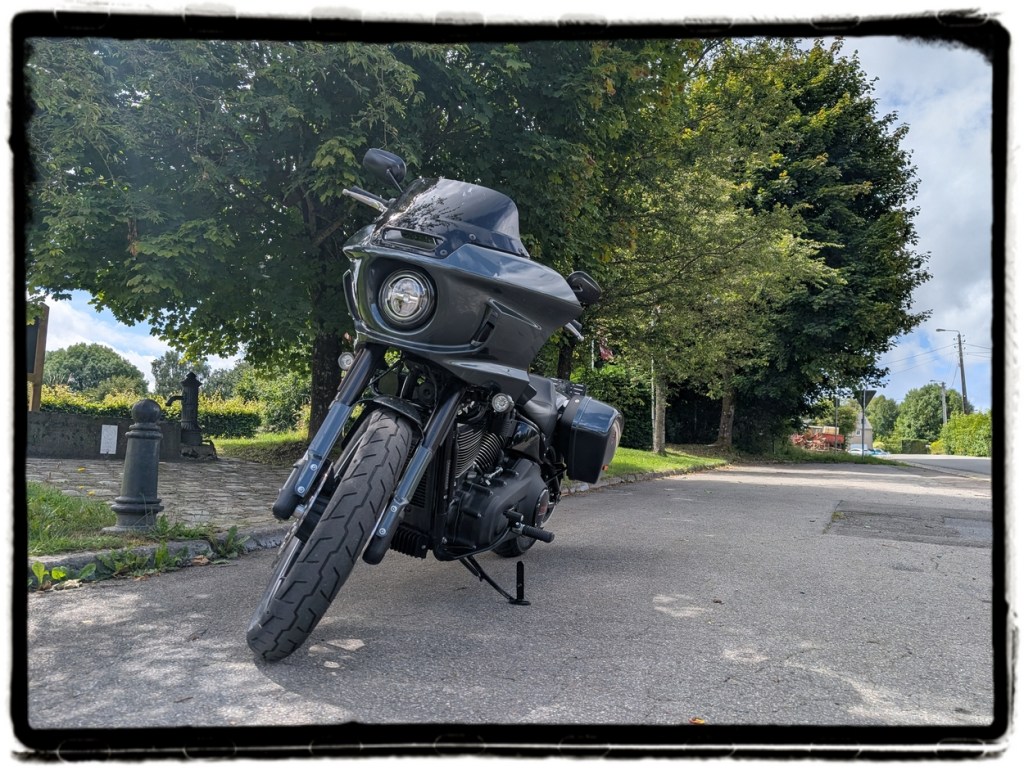
A heavy downpour confirms the above story and also forces me to add a new chapter. While your upper body stays mostly dry if you keep up the pace, the rain has a different plan for your lower half. The seat cradles you like a bowl, which means I got treated to a set of soggy balls.
That said, the seat itself is actually pretty comfortable. After a full day in the saddle, my butt had no complaints. With its raised rear, it offers good support when you twist the throttle with intent. On the flip side, the seat locks you into a single position, and its scooped shape has you arching your back a little too easily. Rolling your hips forward every now and then is part of the deal.
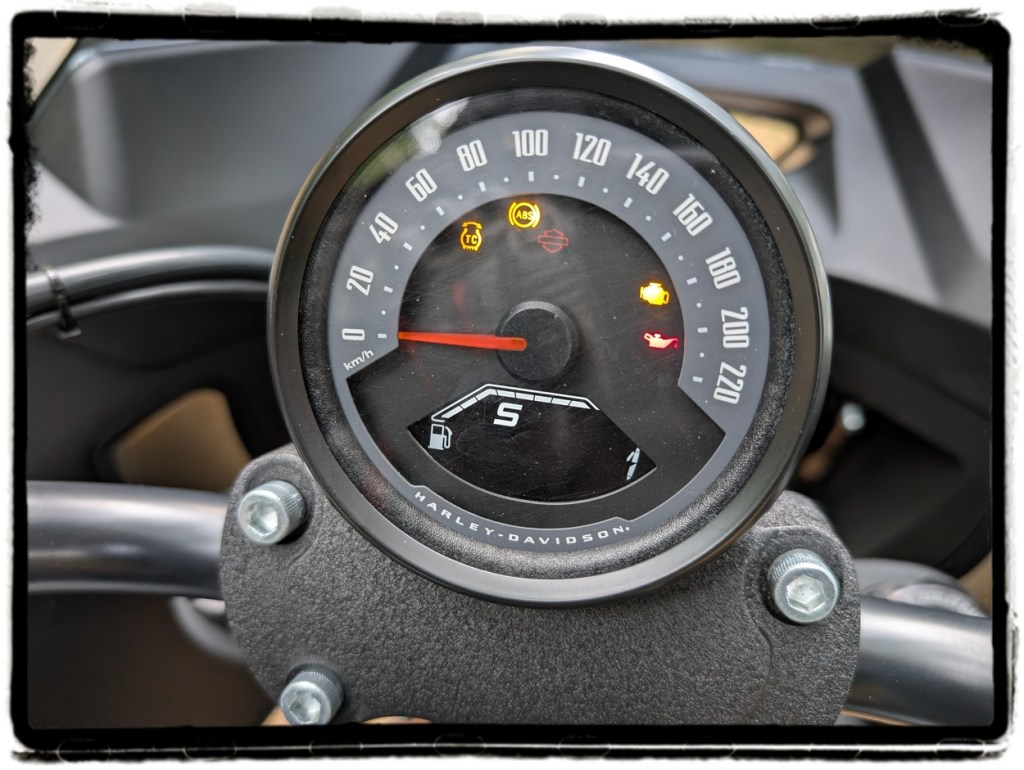
Cruise control comes standard on the ST, a welcome feature for devouring long, straight stretches of highway. It works smoothly and is easy to operate, a clear step up from the last Harley cruise control I used (that was on the Pan America). That said, there’s still room for improvement: for starters the speed could be shown digitally. Because while the analog speedo looks cool and classic, reading the exact speed is a bit of a guessing game. The markings are 5 mph apart, and the small dial doesn’t help either.
The digital display is easy to read however. It shows the gear indicator, fuel level and ride mode. With the menu button, you can scroll through the odometer, two trip meters, tachometer, clock, range and (surprise!) tire pressure front and rear. Oh, and there’s a USB-C port tucked under the left side of the tank. Always handy.

All in all, this well-equipped American is built for long rides and makes them anything but a chore. The only thing missing from the standard setup? Heated grips. But hey, there’s always the accessories catalog.
Time to leave the highway behind. After a successful first leg of the test, it’s on to phase two: the twisty roads of the Ardennes. I quickly find my favorite riding mode. Rain feels sluggish and might be considered when the roads get sketchy. Street gives you a smooth torque curve. But it’s Sport I enjoy the most. It’s the most responsive and with noticeably more oomph down low. Each mode also adjusts engine braking, ABS, and traction control.

The Sport mode is a perfect match for the punchy engine that begs to be ridden hard. Despite its imposing presence, the ST drops into corners more easily than you’d expect. Flicking it from lean to lean, though? That’s a full-body workout, but that’s no big surprise. 712 lbs doesn’t just disappear.
You’ll quickly realize this isn’t the kind of bike you want to throw into a series of tight, technical turns, especially not at a spirited pace. The weight works against you, and the brakes aren’t sharp or responsive enough for aggressive, last-minute braking into corners. Try it and the suspension starts to feel unsettled.
As mentioned earlier, the clutch and brake levers are on the heavy side, something you eventually get used to, kind of. Less easy to get used to is that the rear brake needs a firm stomp to respond, and when it finally does, it’s with a reluctant shrug.
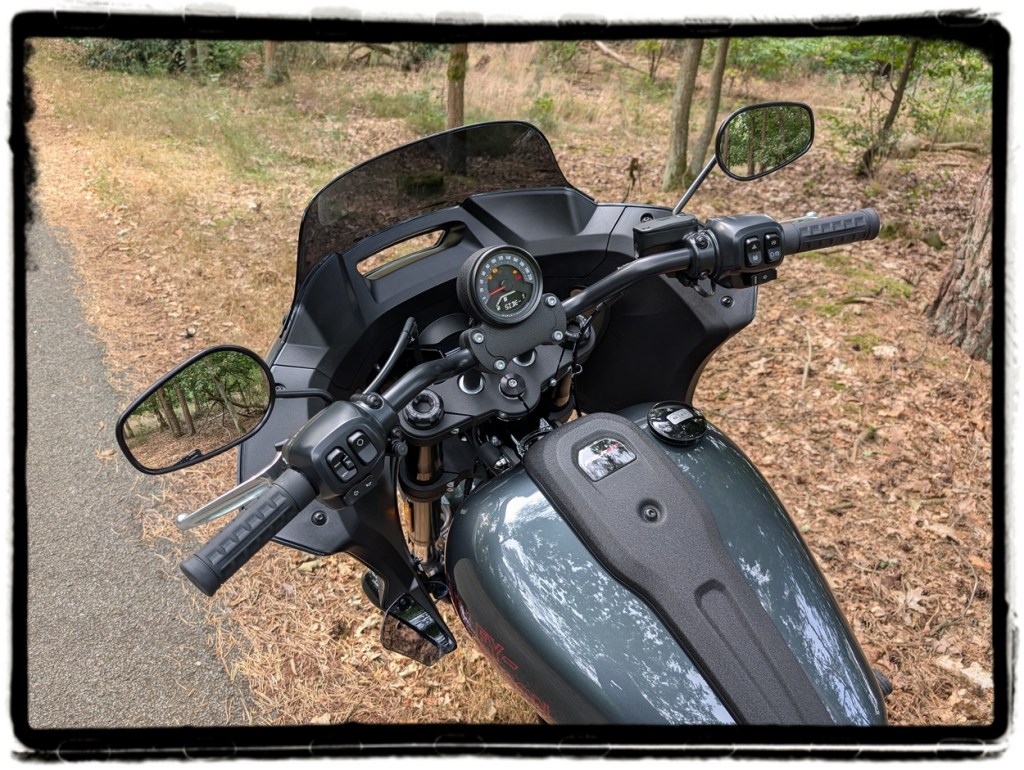
Stick to smooth, flowing sweepers and the Low Rider ST finds its groove. This is where it really shines, confident, stable and fun to ride. It pulls hard from way down low and keeps the torque coming without losing steam… though you’ll hit the rev limiter just shy of 6,000 rpm. Like with the Street Bob, the whole experience gets even better when you ride it dynamically: initiate turns with your upper body and it feels you link one bend to the next all day long.
The suspension handles this active cruising style with ease, and even on the patchy backroads of the Ardennes (almost more off-road than asphalt in places) the bike keeps its composure.
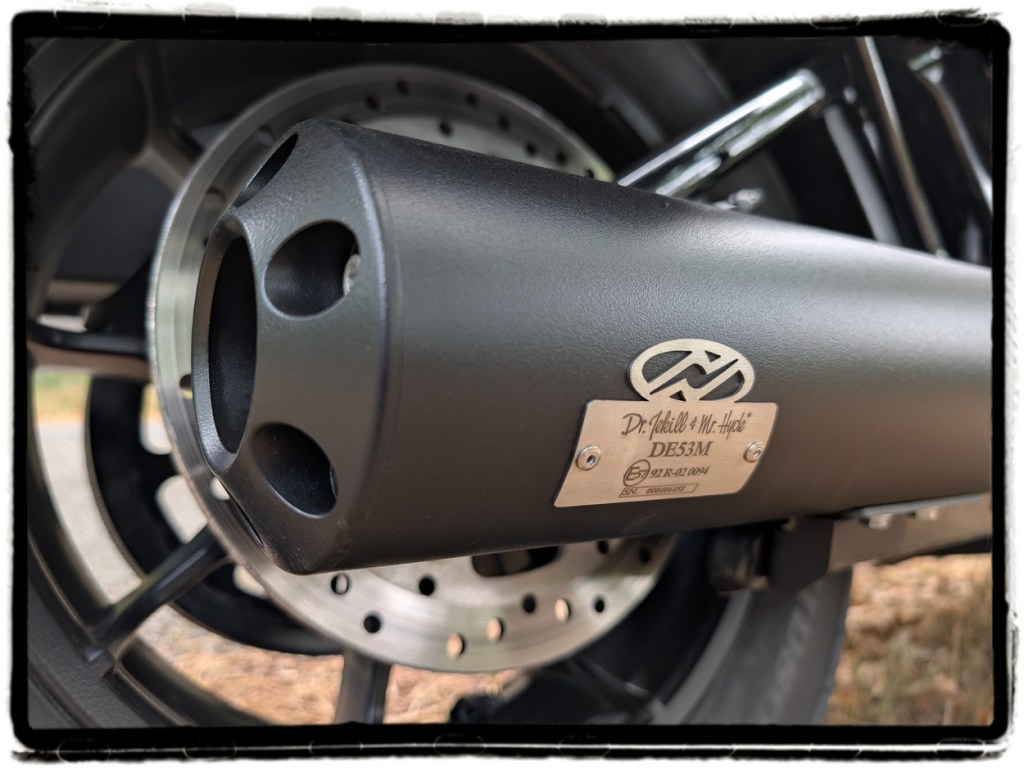
Sound-wise, it scores big points too. My test bike came fitted with a Dr. Jekill & Mr. Hyde exhaust, an add-on that’ll set you back a couple of thousands. In closed mode, it delivers a deep, satisfying rumble that stays rich even when you’re wringing it out. Open up the exhaust and things get louder, deeper and far rowdier. Will your neighbors love it? Unlikely. There’s also a halfway setting for those who want some growl without making the J & H duo jobless.

Conclusion
I’ve always had a soft spot for the cool factor and styling of many Harley-Davidsons. The Low Rider ST is no exception. The front fairing and side bags give it a proper retro vibe, and it’s a good-looking package overall. But looks alone won’t win me over.
An equally important question is: does it ride as good as it looks? Well, that depends. If your idea of fun is laid-back cruising and soaking up the scenery, then absolutely it’s a blast. But if you’re looking to hammer through tight, technical twisties all afternoon… this ain’t your weapon of choice. The engine’s got the guts, but the brakes and suspension can’t quite keep up.
That said, who’s really buying a Low Rider ST to go full hairpin hooligan? Just looking at it, you know it’s made for big sweepers and long-distance fun. And in that role, it delivers. It doesn’t have to be boring either: the Milwaukee-Eight 117 V-twin brings serious punch, and with cornering ABS and traction control finally onboard, you’ve got a proper safety net to back you up.
Pros
+ High-performance engine really delivers
+ Comfortable cruiser
+ Ahhh, finally some tech!
Cons
– Brakes aren’t powerful enough for the bike’s character
– Levers and pedals could definitely be lighter
– Display could use some extra attention
Tech specs
Dimensions
Length: 92.9 in.
Width: 35 in.
Seat Height, Laden: 27 in.
Ground Clearance: 5.7 in.
Rake: 28
Trail: 5.7 in.
Wheelbase: 63.6 in.
Tire, Type: Michelin® Scorcher 31, front and rear
Tires, Front Specification: 110/90B19,62H,BW
Tires, Rear Specification: 180/70B16,77H,BW
Fuel Capacity: 5 gal.
Oil Capacity (w/filter): 5 qt.
Weight, In Running Order: 712 lb.
Luggage Capacity – Volume: 2 cu ft
Engine
Engine: Milwaukee-Eight® 117 High Output
Bore: 4.075 in.
Stroke: 4.5 in.
Displacement: 117 cu in
Compression Ratio: 10.3:1
Fuel System: Electronic Sequential Port Fuel Injection (ESPFI)
Exhaust: 2-into-1; catalyst in header
Chassis
Front Fork: Single cartridge 43 mm inverted with aluminum fork triple clamps; single rate spring
Rear Shocks: Hidden, free piston, coil-over monoshock; 56 mm stroke; hydraulic preload adjustment
Wheels, Optional Style Type: Black, Radiate Cast Aluminum
Wheels, Front Type: Chrome, Radiate Cast Aluminum
Wheels, Rear Type: Chrome, Radiate Cast Aluminum
Brakes, Caliper Type: 4-piston fixed front and 2-piston floating rear
Brakes, Rotor Type: Front and rear black, Split 7-spoke floating rotors
Primary Drive: Chain, 34/46 ratio
Performance
Engine Torque: 128 ft-lb at 4000 rpm
Horsepower: 114 HP / 85 kW @ 5000 rpm
Lean Angle, Right (deg.): 31.3
Lean Angle, Left (deg.): 31.3
 Team Throttle
Great review! My 2018 H-D Sport Glide has almost 40k miles and I’m looking to upgrade soon. I’m considering two 2025 models — the Low Rider ST (with forward controls) and the Triumph Rocket 3 GT (with panniers). You folks haven’t reviewed the Rocket yet, but any thoughts between these two bikes? Even with a larger windscreen on the Triumph, the Harley has better wind protection. They both have plenty of torque for me. I’m mostly interested in their cornering and handling on twisty backroads. Thanks!
LikeLike
Hi Al, indeed we didn’t try the Rocket. Our advice would be to go to the dealer and test them both 🙂 Enjoy your new ride!
LikeLike