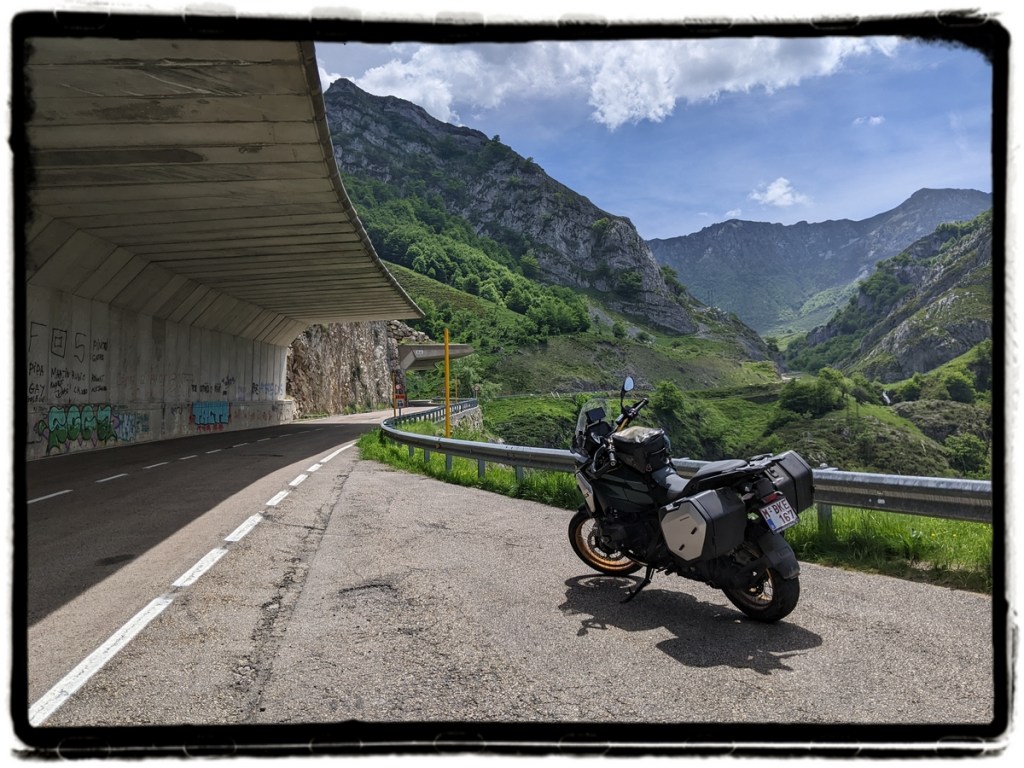
2023 must have been a very anticipatory year for BMW Motorrad. Because when you replace the most popular steed in your stable, you obviously don’t want to make a poor impression. Moreover, BMW didn’t settle for a cautious facelift and a few small technical tweaks, but pushed itself to a major makeover. I had the opportunity to test the new 2024 BMW R 1300 GS for a week during a trip to Spain with two friends. The report of that trip will follow. For now: my findings of the GS after 4300 km in the seat.
To illustrate the importance of the GS for BMW’s business figures: in 2023, BMW sold a little more than 209,000 motorcycles worldwide. More than 60,000 of those were accounted for by the ‘big GS club,’ namely the 1250 GS, the 1250 GS Adventure, and the new 1300 GS (which has been on the market since the fall of 2023). You can safely say it’s BMW Motorrad’s cash cow.
I also want to mention upfront that I’m not a member of the GS Haters Club. Okay, it seems like everyone has a GS, making it feel somewhat ubiquitous. But after testing the 1200 GS Rallye and “needing” a new motorcycle myself, I almost bought a second-hand blue 1200 Rallye. Yes, I chose a different bike (also a blue one), but it was a close call. In other words, I liked the GS, don’t mind if do.

More accessible
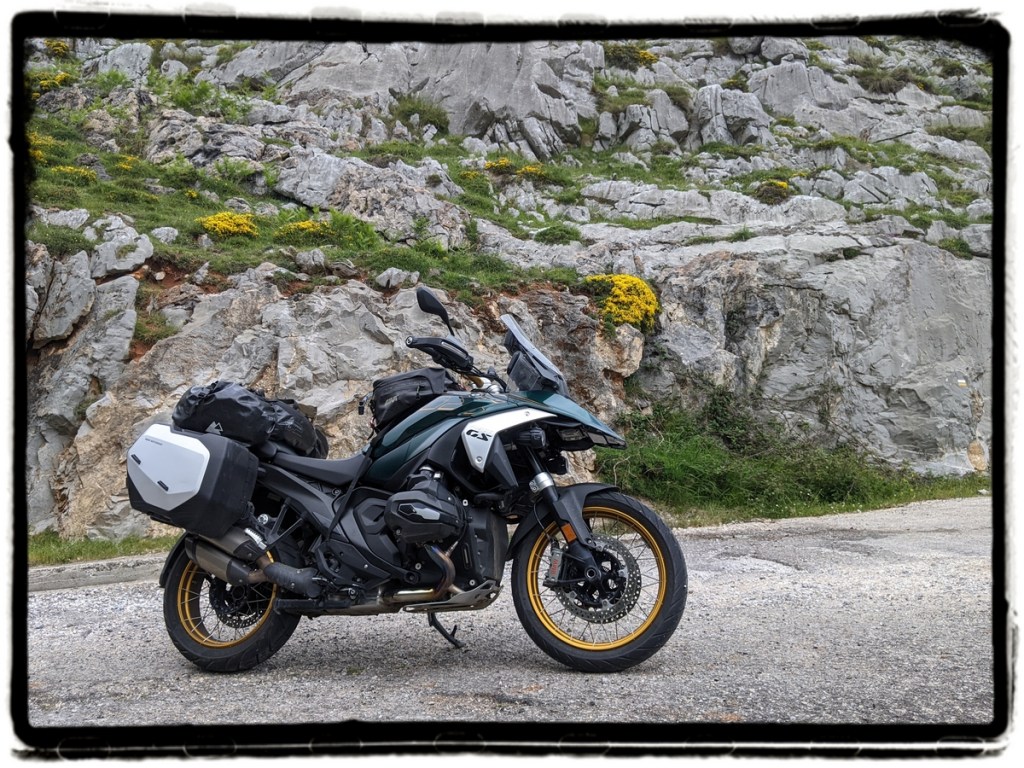
A first look at the new 1300 immediately tells you that this is a completely new Gelände/Straße. Where the 1250 (and especially the Adventure) looks imposing and, for some, probably overwhelming with its tall and broad stature, the 1300 appears smaller, slimmer and more accessible.
The asymmetric headlight of the previous models has been replaced by a symmetrical X-shaped one, giving the 1300 GS not only a friendlier face, it also reinforces its smaller appearance due to the lower placement of the headlight.

The tank looks like it shrunk, and the engine is more compact by placing the gearbox underneath instead of behind the boxer engine. This not only saves space but also lowers the center of gravity (even further!) compared to the 1250.
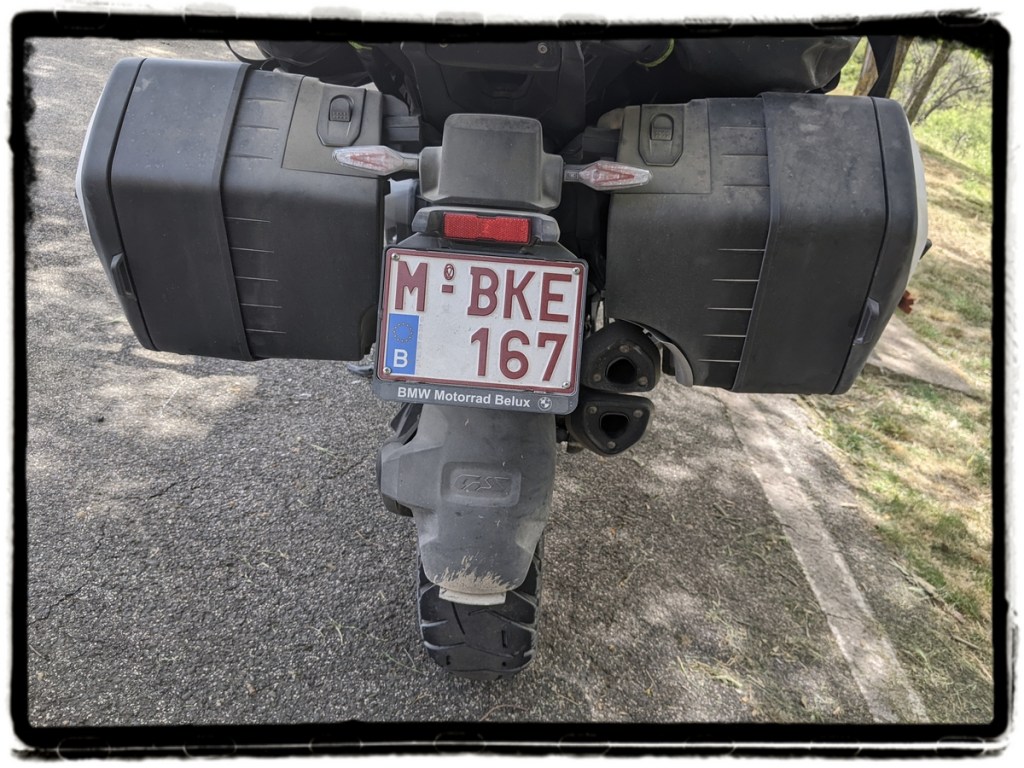
The tubular frame got a one-way ticket to the scrapyard and was replaced by a pressed steel frame, to which an aluminum subframe is bolted. Combined with the covering around the engine, this results in a sleeker look that also makes cleaning much easier. I like that!
The rear underwent a slimming down too. The design team took the rear lights from models like the RR and combined them with the plastic block which houses the blind spot sensor. I’ve seen rear ends getting more butchered by that sensor (talking to you, Tiger 1200). With the 1300 GS, it’s not too bad overall. Especially the sensor at the front (for both active cruise control and front collision warning) is, in my opinion, an example of how to optimally integrate such an ugly piece of plastic into the design.
Relax, it’s still a GS
And then it’s finally time to swing my leg over the seat. First thought: ‘This feels just like a GS’. The wide handlebars with the familiar buttons, the upright seating position, the trusted TFT display: anyone who has ridden a GS before will immediately feel at home.

However, there’s still a lot that’s new. Besides the new engine, both the Telelever and Paralever have been revamped, and there’s a slew of new technology such as adaptive height adjustment, updated electronic suspension and an electrically adjustable windshield. Although, many of these features require delving into the well-known options list.
The base GS is the white one, starting at £16,470. That price includes heated grips, keyless ignition, four riding modes, cruise control and tire pressure control. Opting for Racing Blue, Black Storm, or the quite aristocratic Aurelius Green means opening your wallet a bit further, as each of these colors is part of a style pack: GS Trophy, Triple Black, and Option 719 Tramuntana, respectively.
Each pack not only includes the paint job but also a range of specific additional options, which can be expanded with individual options and option packages. Think of items like a center stand, quickshifter, active cruise control or the Vario cases. If you indulge in all the extras, don’t be surprised if your bill easily surpasses £25,000.
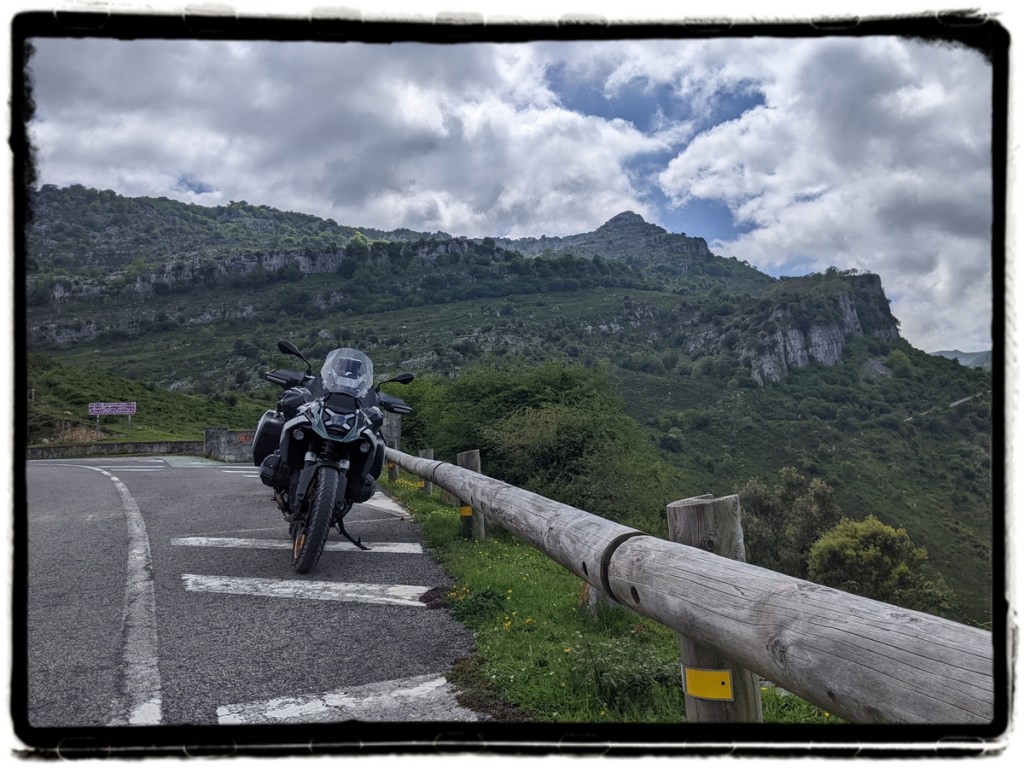
I won’t blame you if you need a moment to digest that number, but I’ll gladly reveal that you won’t buy a cat in a bag: the new GS is a winner. Starting with the engine. Good for 148 Nm at 6,500 rpm and 145 hp at 7,750 rpm. Particularly impressive are those Newton meters. Spread broadly from 3,600 to 7,800 rpm, the 1300 cc boxer engine consistently delivers at least 130 Nm. Stopping at toll booths is never a ‘yay’ moment, but once the gate opens: twist the throttle wide open, click through the gears with the quickshifter, and grin broadly – very broadly. Boy oh boy, the acceleration of the GS is just insane! You could do 0 to 100 in 3.4 seconds if you want.
That broad torque also means you can ride the 1300 GS remarkably shift-free, as it always has enough power on tap to accelerate smoothly. The gearbox and quickshifter have improved over previous models, but still fall short of perfection. This remains a sore point with BMW. A positive is how seamlessly the gearbox works with the cruise control: you can upshift and downshift with both the quickshifter and clutch lever without canceling cruise control.
Tech, tech and more tech
Speaking of cruise control: optionally, you can have an active version. Thanks to the sensor on the nose the bike will automatically maintain a distance from vehicles ahead. I wasn’t a fan of this technology on the 1250 RT, and the new GS hasn’t changed my mind. During the trip to Spain, I intentionally didn’t deactivate the system to see if I could get used to it, but it remains a ‘no thanks’ from me. If a car in front of you slows down slightly and the bike reacts almost imperceptibly: I don’t like it. Another gripe: you have to delve deep into the menu to deactivate the automatic distance control (I counted: 10 button presses), and you have to deactivate it every time you start the bike. Come on BMW!

The sensor above the headlight serves not only for the active cruise control but also for the front collision warning, which alerts you. It can even brake if there’s a risk of unwanted intimacies with a vehicle ahead. For those who often ride in busy city traffic, closely surrounded by other road users: the signal on the dashboard might start to bother you. I found this out several times on the Parisian périphérique. But fortunately, it can be disabled.

And while we’re on the topic of sensors: the blind spot sensor on the rear, in my opinion, can go straight into the trash. In one of my previous cars I found it unnecessary and not 100% reliable, I felt the same way after encountering it last year with the Tiger 1200 and the GS hasn’t made me reconsider.
Does the BMW R 1300 GS have any good new tech on board then? Of course it does, and you don’t always have to look far. For the first time, we see an (optional) electrically adjustable windshield on a GS. It worked really great. Fully raised on the highway, at my 1.80 m height, I was comfortably shielded from turbulence, and fully lowered, it’s ideal for catching a breeze on warm days on back roads.
Also new on the GS (and optional, of course) is the automatic height adjustment, as we’ve seen before on the Harley Pan America. This allows the BMW to lower by 20 mm when riding slowly or stopped, reducing the seat height from 850 to 830 mm. Personally, I find it unnecessary, but for shorter legged riders, it makes this already less imposing GS even more accessible. By the way, the Pan America can lower up to 50 mm, depending on your settings. Oh, and the GS no longer has an adjustable seat. So if 850 mm feels too high or too low for you, the sales guy will point out there’s a thing called the options menu.
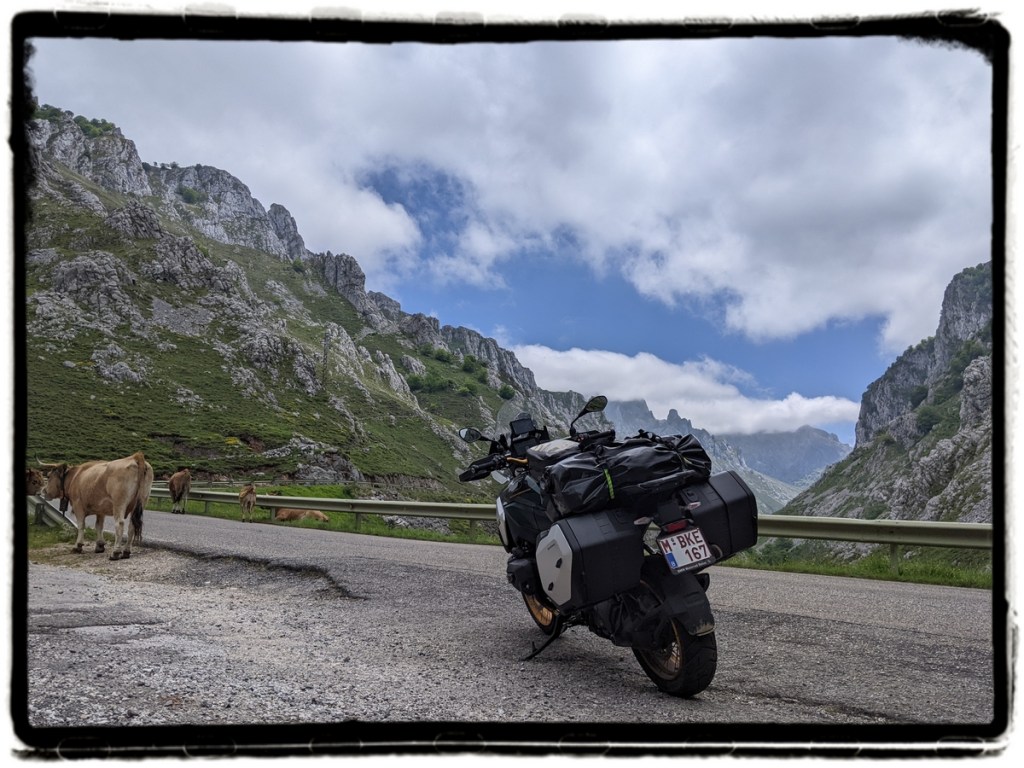
Torque powerhouse
Despite the non-adjustable seat, the GS sits well. At first, it seemed like my knees were at a slightly too acute angle. But it didn’t take long for me to get used to that angle, and the many kilometers caused little to no knee discomfort.
It doesn’t stop there: the 1300 GS is simply a wonderfully comfortable touring motorcycle. The seating position is pleasant, the electric screen keeps you well-protected from the wind, the cruise control reduces fatigue during long highway rides, the shaft drive makes it maintenance-friendly, and then there’s the updated electronic suspension, called Dynamic Suspension Adjustment (DSA) – formerly ESA. It’s fully automatic now and – hello there piggy bank – optional. While in the previous version you had to manually select whether you were riding solo, two-up, or with luggage, the new suspension automatically adjusts for these factors along with the selected riding mode, road conditions, and rider input. You can set the damping to Road or Dynamic, and adjust each from -2 to +2.

I found the Road damping very comfortable for long highway rides, but it turns the GS into a rolling boat once the fun of cornering begins. I switched to Dynamic mode at +2, the stiffest setting: the GS then handles much tighter without becoming uncomfortable. In fact, it’s astonishing how easily and effortlessly the new 1300 handles corners. It holds the line confidently, the throttle response (as often noted with BMW) is exemplary. The bike allows corrections without complaint, and it remains composed if you misjudge a corner and need to apply some brake mid-turn. There’s no noticeable diving, and credit for this goes to the updated Telelever front suspension and sensitive brakes.
Combine the confidence the GS offers with the torque powerhouse that the twin-cylinder has become, and the result is an immensely enjoyable cornering machine. Accelerating out of corners is pure joy, time and time again. During my trip to Spain, my Cardo intercom transmitted multiple times: ‘Jean, I’ve never seen you riding as sporty as with that GS!!’
However, let there be no mistake: despite all the fun in the corners, you’re still riding a machine weighing 237 kg (fully fueled). This is 12 kg lighter than its predecessor – weight saved on the engine, gearbox, and the 1-liter smaller tank – but it’s not exactly playful. The joy lies in its unwavering ability to devour every corner and the power with which you can exit corners right from the bottom. The GS remains primarily a comfortable touring motorcycle that eagerly embraces a bit of spirited riding.

Another GS bites (the/no) dust
Few GS riders take their machine off-road, which isn’t entirely illogical given its price tag and weight. In Spain, we had the Bardenas Reales on our itinerary and unexpectedly encountered two additional stretches of unpaved terrain, seldom rougher than loose gravel.
The GS effortlessly navigated through it all. With the Enduro riding mode engaged, the soft throttle response, the rear brake that allows locking (note: only with optional Enduro Pro mode), and of course, its low center of gravity: having no off-road experience with a GS between your legs doesn’t equate to trembling knees, as long as it’s not overly technical.
Also worth mentioning is the ability to switch riding modes while riding (including switching to Enduro mode), something the new Tiger 900 (which was also on the trip, review to follow) couldn’t do.
Speaking of my fellow riders: apparently, the GS was streamlined to collect minimal dirt. After a dusty traverse of the Bardenas Reales, I can confirm this. It seemed my two companions were in for a much more extensive cleanup than me.
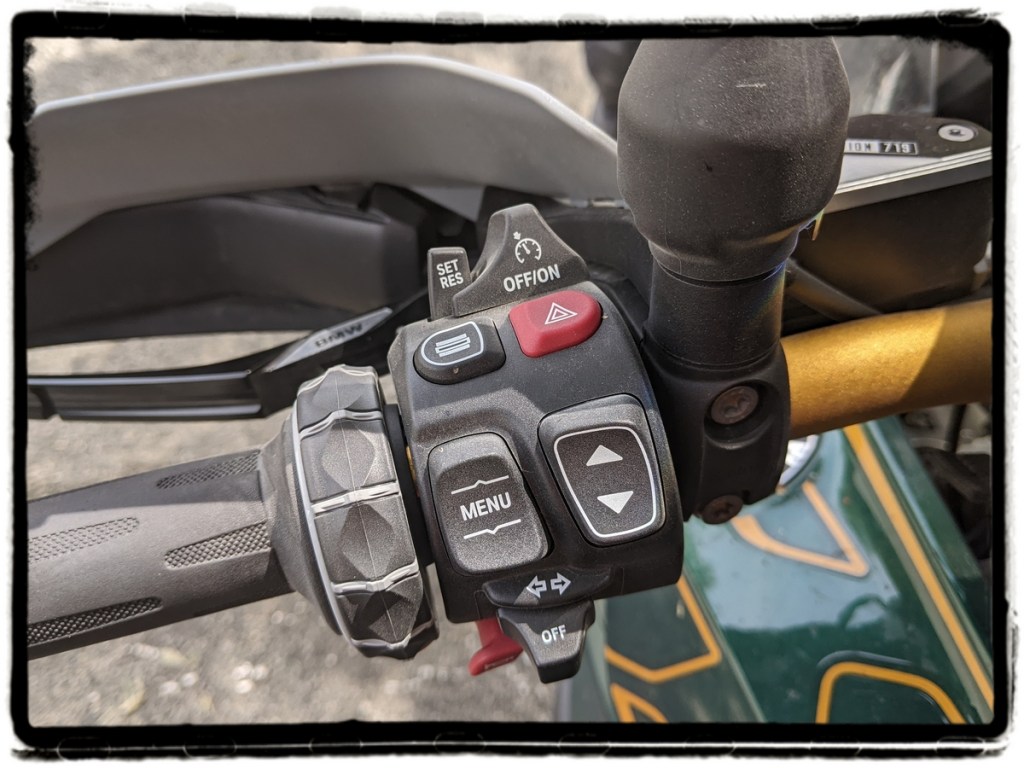
Regarding the display and buttons, there isn’t much news. The layout of the display has hardly changed, and the menu still follows the same recipe. What is new, however, is the quick-select button (some call it the hamburger or sandwich button). This allows you to quickly access frequently used settings such as the electric screen, heated grips or suspension damping. On one hand, this is convenient, but on the other hand, the new button makes the whole button layout of the bike a little less intuitive. That being said, BMW continues to reign when it comes to buttons, display and menu structure.
To conclude, here are two clever features that prove ingenuity doesn’t always have to be high-tech. The center stand has a folding foot so your left heel doesn’t keep touching it, and the brake and clutch levers are adjusted not with the usual twist wheel but with a much handier sliding button with three positions.
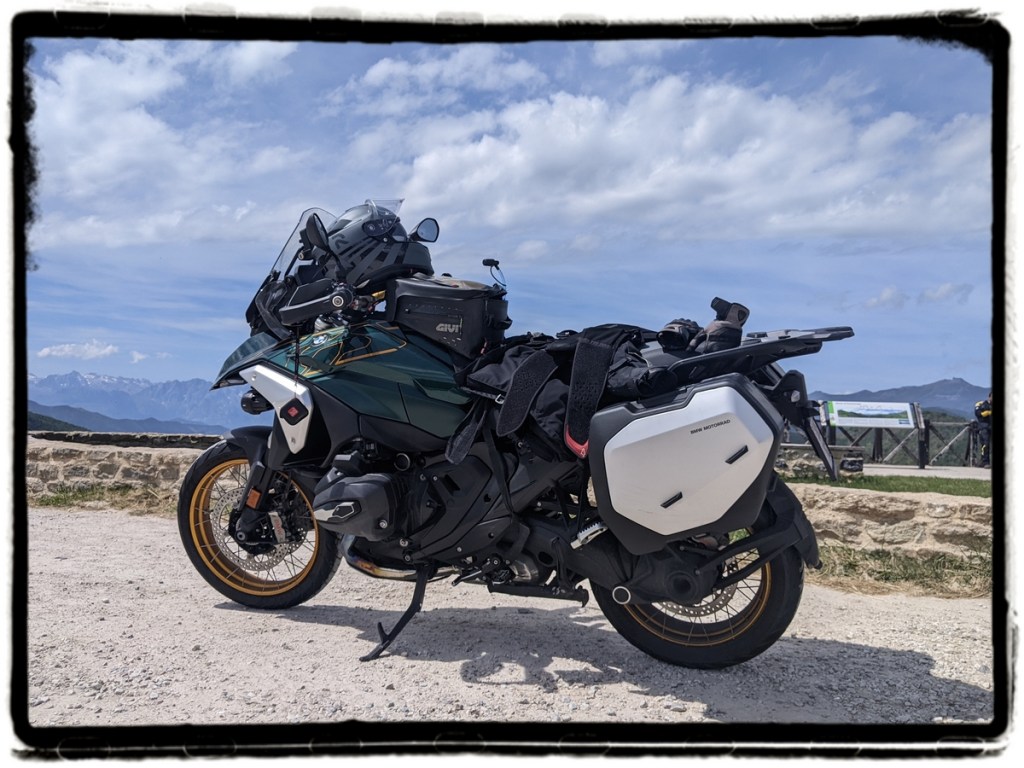
Conclusion
With the completely new BMW R 1300 GS, BMW Motorrad has delivered a nicely polished piece of work. They have not only refined the most popular bike from their stable and given it a more accessible look, but also significantly upped the fun factor of the bike. Still, this sixth generation feels like a typical GS: comfortable, powerful, and ready to travel the world.
The list of technological features is extensive. While I won’t argue that innovations like blind-spot warning are unnecessary (can’t be against more safety), I personally prefer simplicity. Features like active cruise control will delight some and annoy others. It really depends on who’s in the seat.
However, one thing is certain: the R 1300 GS ranks among the top of the big adventure bikes. Previous GS riders will be pleased to see improvements across the board. And for those who have never tried a GS and are shopping in this class, you owe it to yourself to at least take this German machine for a test ride. Or do I hear your piggy bank loudly protesting already?
Pros
+ Fantastic engine
+ Comfortable long-distance cruiser
+ Confidence-inspiring chassis
Cons
– I prefer less technology in the standard package and a lower price
– Gearbox and quickshifter can still be improved
– Button layout has lost some intuitiveness
Technical specifications
Engine
Rated output: 107 kW (145 hp) at 7,750 rpm
Emission control: Closed-loop 3-way catalytic converter
Type: Air/liquid-cooled four-stroke flat twin engine with double overhead and chain driven camshafts (BMW ShiftCam) and balance gear wheels
Bore x stroke: 106.5 mm x 73 mm
Capacity: 1,300 cc
Max. torque: 149 Nm at 6,500 rpm
Compression ratio: 13.3 : 1
Mixture control: Electronic intake pipe injection
Exhaust emission standards: EU 5
Performance / fuel consumption
Maximum speed: over 200 km/h
Fuel consumption per 100 km based on WMTC: 4.8 l
CO2 emission based on WMTC: 110 g/km
Fuel type: Super unleaded, 95 ROZ/RON; adaptive fuel quality regulation, 91-98 ROZ/RON
Electrical system
Alternator: Three-phase alternator with 650 W (nominal power)
Battery: 12 V / 14 Ah, maintenance-free AGM battery
Power transmission
Clutch: Wet clutch, anti-hopping clutch, hydraulically operated
Gearbox: Claw-shifted 6-speed gearbox
Drive: Cardan
Traction control: BMW Motorrad DTC
Chassis / brakes
Frame: Two-part frame concept consisting of main frame and rear frame bolted to it, co-supporting engine
Front wheel location / suspension: BMW Motorrad EVO-Telelever, handlebar tilting decoupeled via flex element, central shock absorber
Rear wheel location / suspension: BMW Motorrad EVO-Paralever, cast aluminium single-sided swingarm, transversal connected swing arm bearings, central WAD spring strut, spring preload fully adjustable
Suspension travel, front / rear: 190 mm / 200 mm
Wheelbase: 1,518 mm
Castor: 112 mm
Steering head angle: 63.8 °
Wheels: Aluminium cast wheels
Rim, front: 3.00 x 19“
Rim, rear: 4.50 x 17“
Tyre, front: 120/70 R19
Tyre, rear: 170/60 R17
Brake, front: Twin disc brake, semi-floating brake discs, diameter 310 mm, 4-piston radial brake caliper
Brake, rear: Single disc brake, diameter 285 mm, 2-piston floating caliper
ABS: BMW Motorrad Full Integral ABS Pro (lean angle optimized)
Dimensions / weights
Seat height at unladen weight: 850 mm
Inner leg curve at unladen weight: 1,900 mm
Usable tank volume: 19 l
Reserve: approx. 4 l
Length: 2,212 mm (over splash guard)
Height: 1,406 mm (above windshield)
Width: 1,000 mm (over hand guard)
Unladen weight, road ready, fully fuelled: 237 kg
Permitted total weight: 465 kg
Payload (with standard equipment): 228 kg
 Team Throttle
Pingback: Review: BMW F 900 GS – Team Throttle